 FNPO Federation of National Postal Organisation, New Delhi
FNPO
T-24, ATUL GROVE ROAD
NEW DELHI 110 001
India
ph: 011- 23321378

FLASH NEWS
21/10/2026
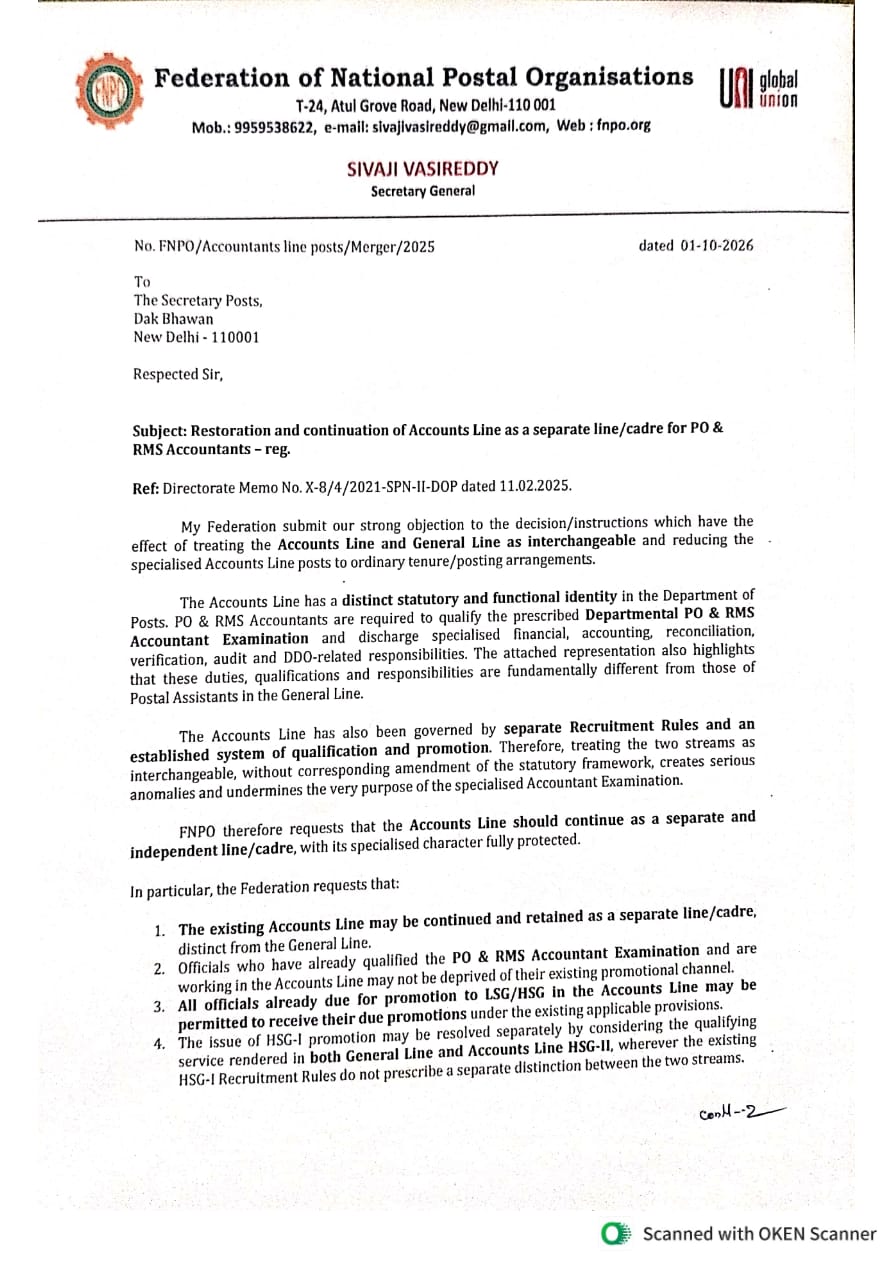
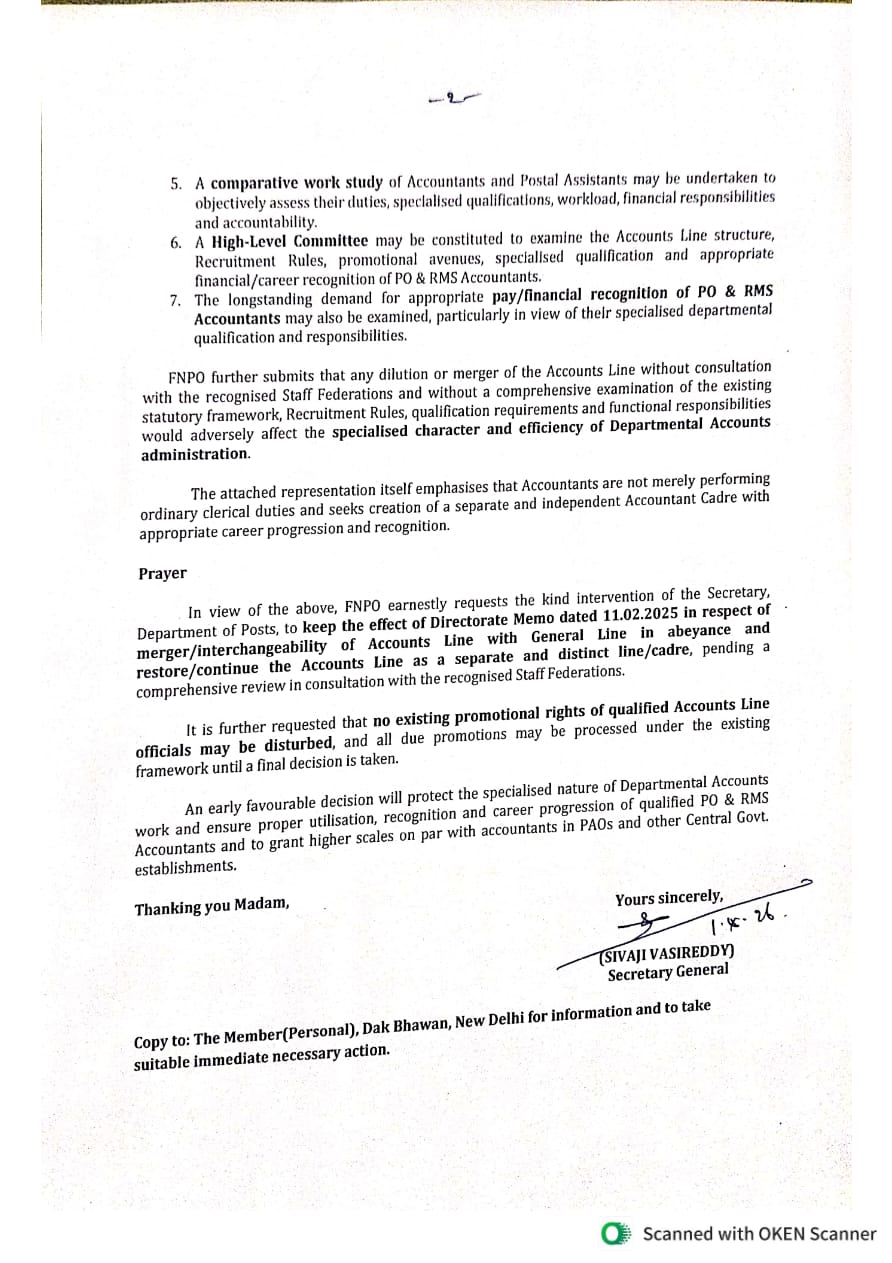
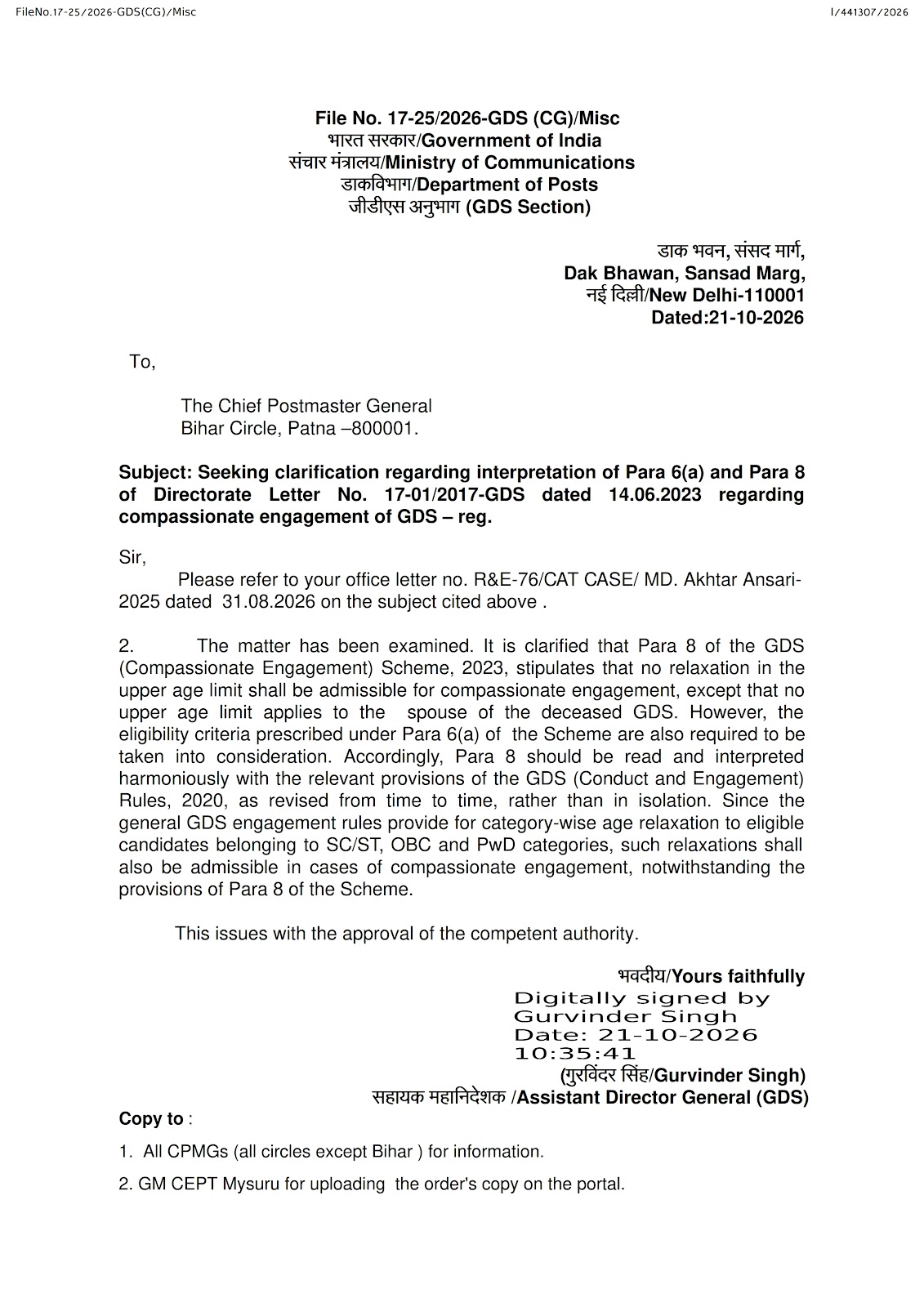
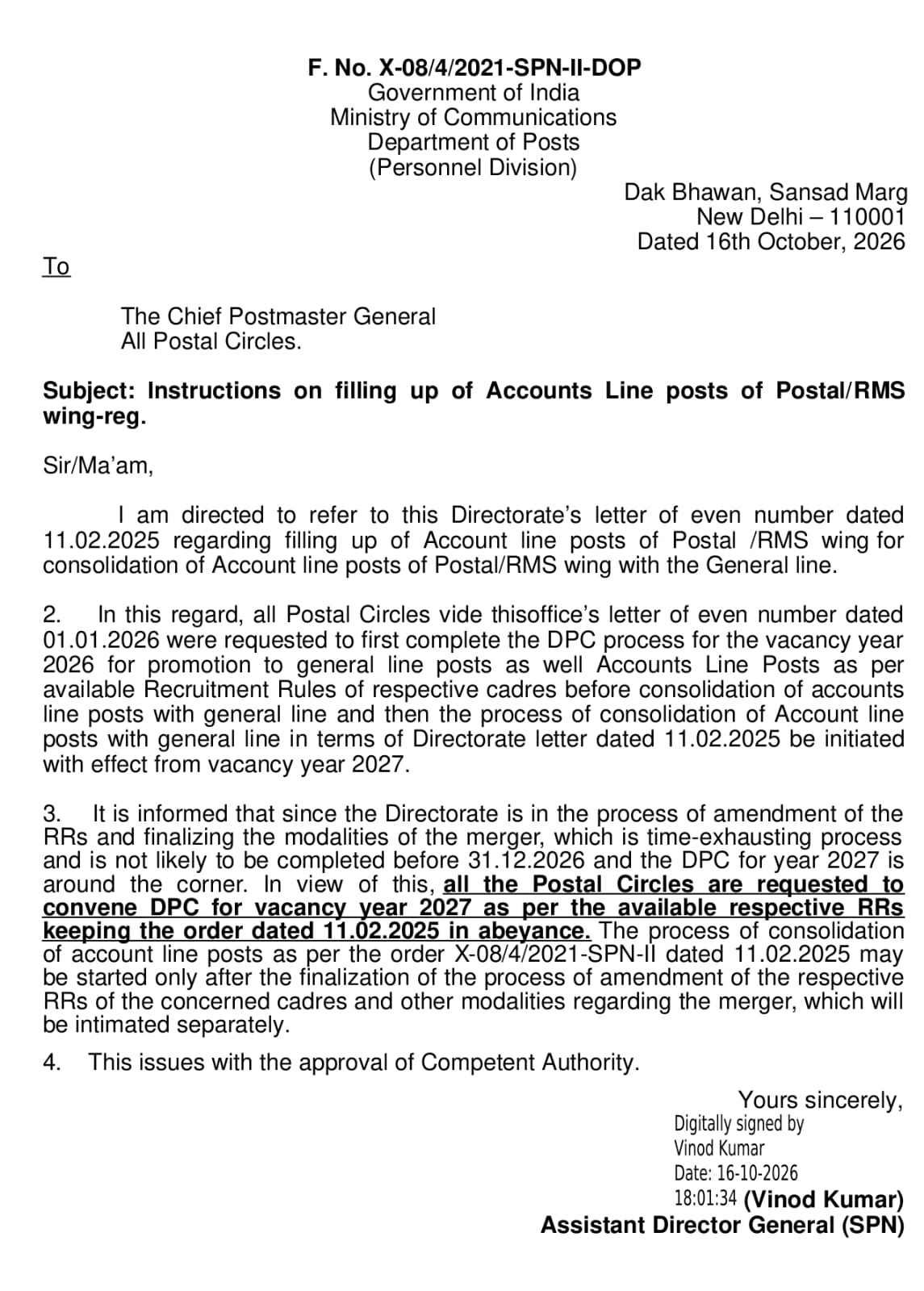 Fresh clarification issued by DoP about filling up of accounts line cadre LSG HSG Posts. The same will continue as per existing RR only. FNPO demanded the same only.
20/10/2026
19/10/2026
Delighted to have a wonderful courtesy meeting on 19.10.26 with Postmaster General Ajmer, Sri B.L. Sonal ji. Great discussions held alongside AR Godara, FNPO NAPEC and Ajay kumar, NUPAO circle secretaries of Rajasthan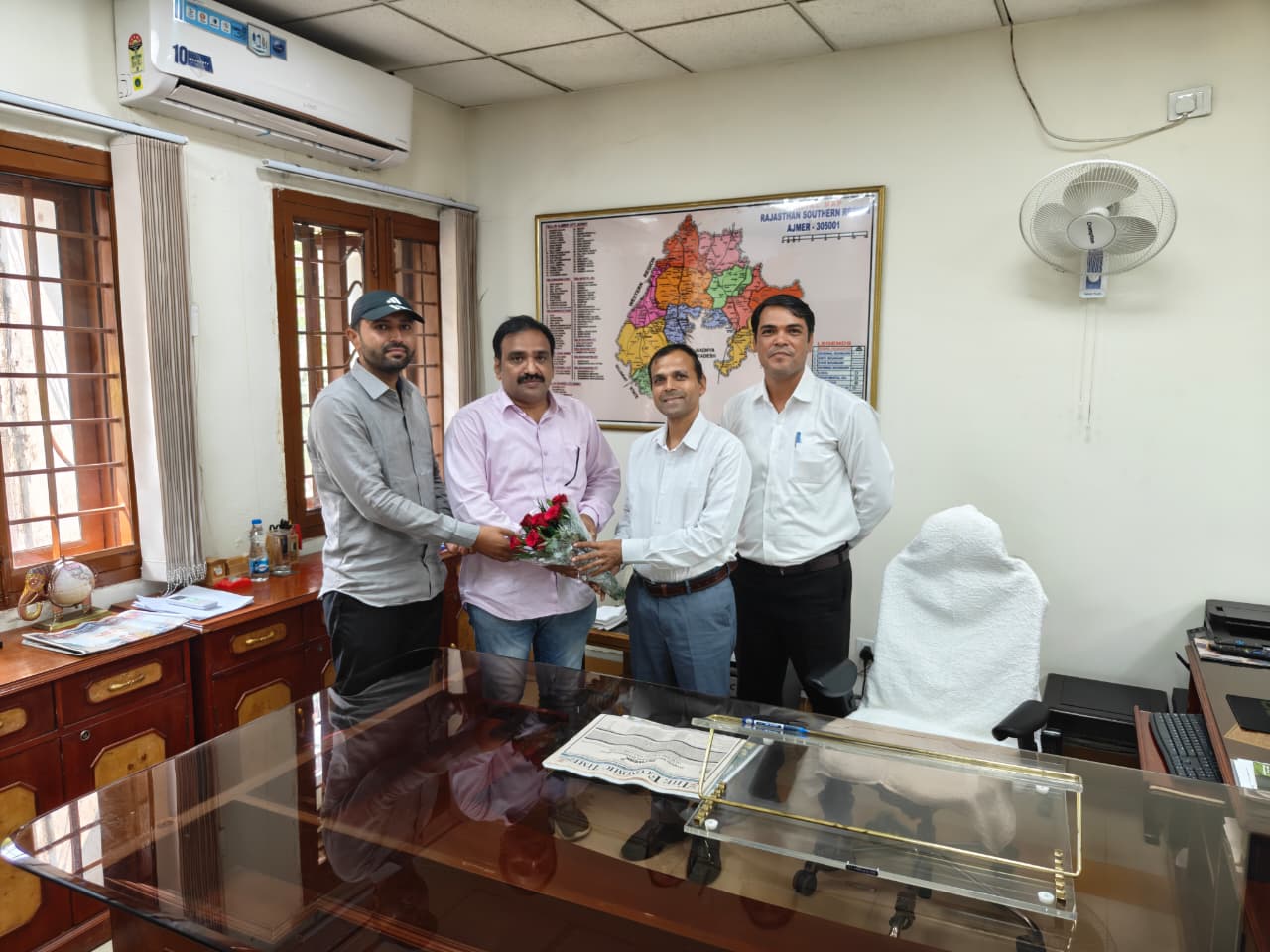
SAG and JAG Additional Charge
Instructions about implementation of administrative rebalancing orders
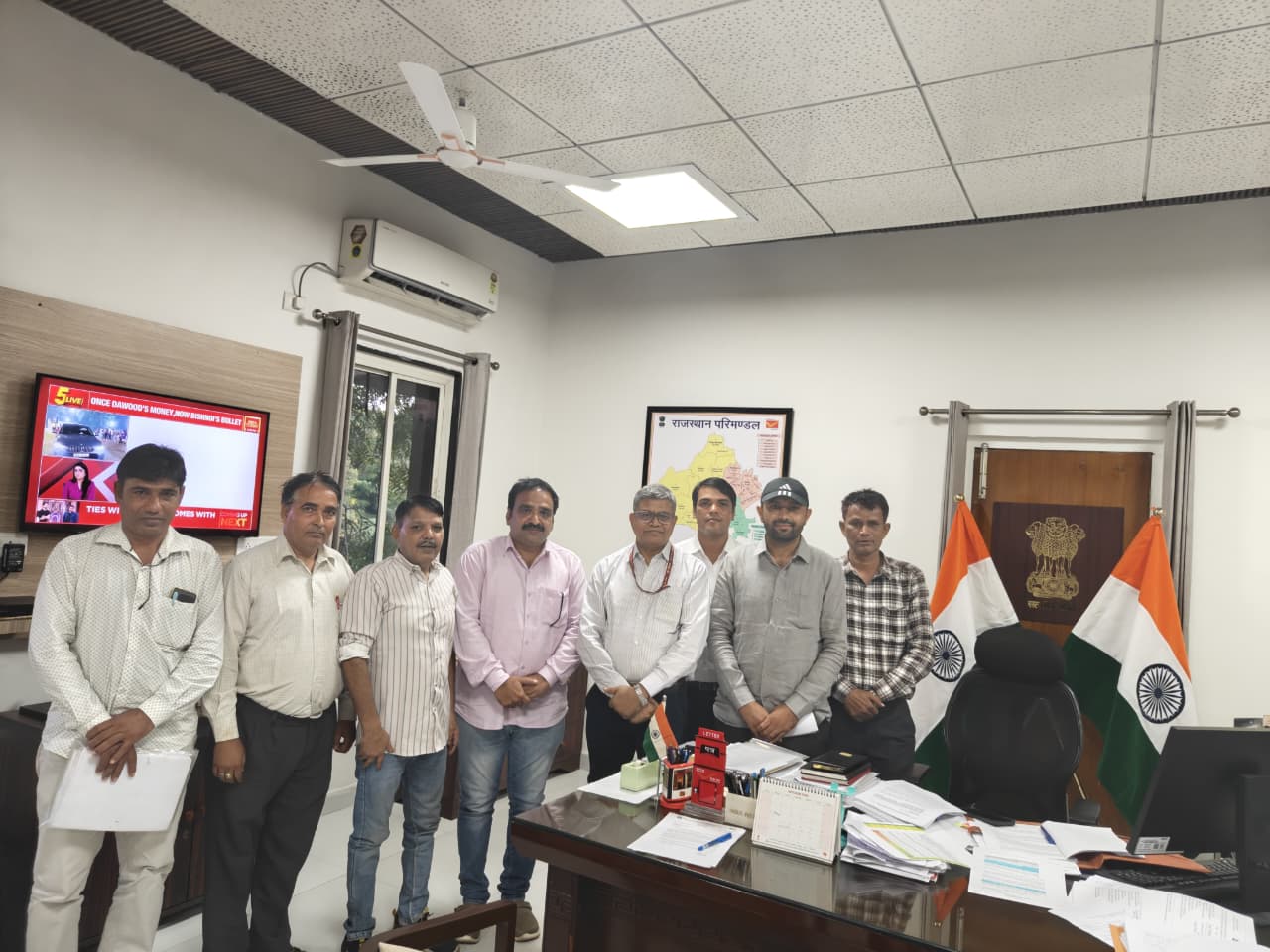 Meeting with CPMG, Rajasthan Circle
 A delegation of FNPO, led by Shri Shivaji Reddy Ji, Secretary General, FNPO, along with A. R. Godara, Circle Secretary, NAPE P3 Rajasthan, Ajay Kumar, Circle Secretary, Administrative Wing, Shri Vinod Ji, President, and Shri Mula Ram Ji, Circle Secretary, P4, met the Chief Postmaster General (CPMG), Rajasthan Circle, and discussed various important issues concerning staff welfare.
🔹 Major issues discussed:
▪️ Postman/MTS Recruitment Results: The issue of pending results against vacancies for the years 2019 and 2020, including the related court case, was discussed in detail. The CPMG assured the delegation that the necessary petition would be filed and efforts would be made to declare the results at the earliest, in accordance with the court order.
▪️ Circle Office Staff Issues: Matters relating to Circle Office section staff, rationalisation of excess posts, and the requirement for additional staff strength were discussed.
▪️ Divisional Issues : Various staff-related grievances and welfare issues from different divisions of Rajasthan Circle were also brought to the notice of the CPMG for appropriate action.
The meeting was constructive, with a strong focus on resolving long-pending issues, protecting employees’ interests, and improving staff welfare across Rajasthan Circle.
FNPO Zindabad!
Employee Unity, Employee Welfare!
18/10/2026
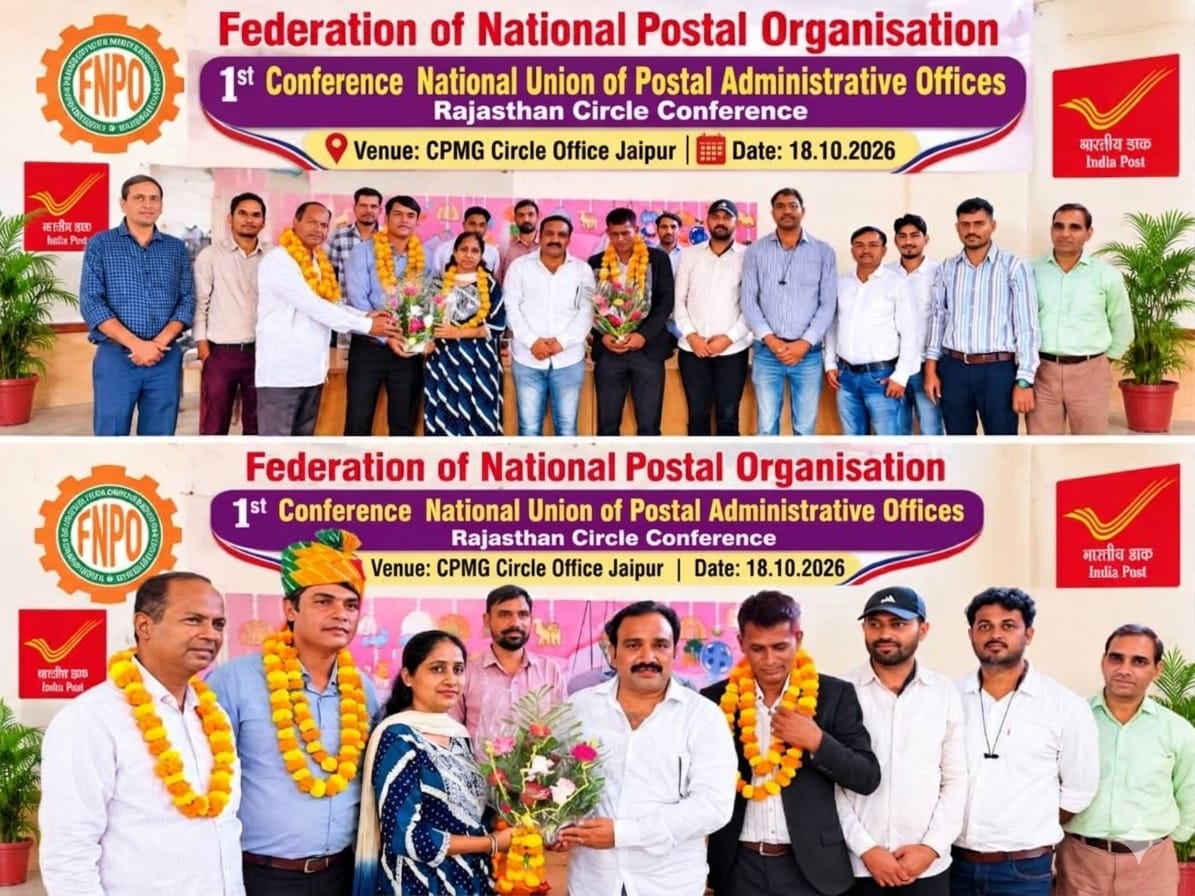
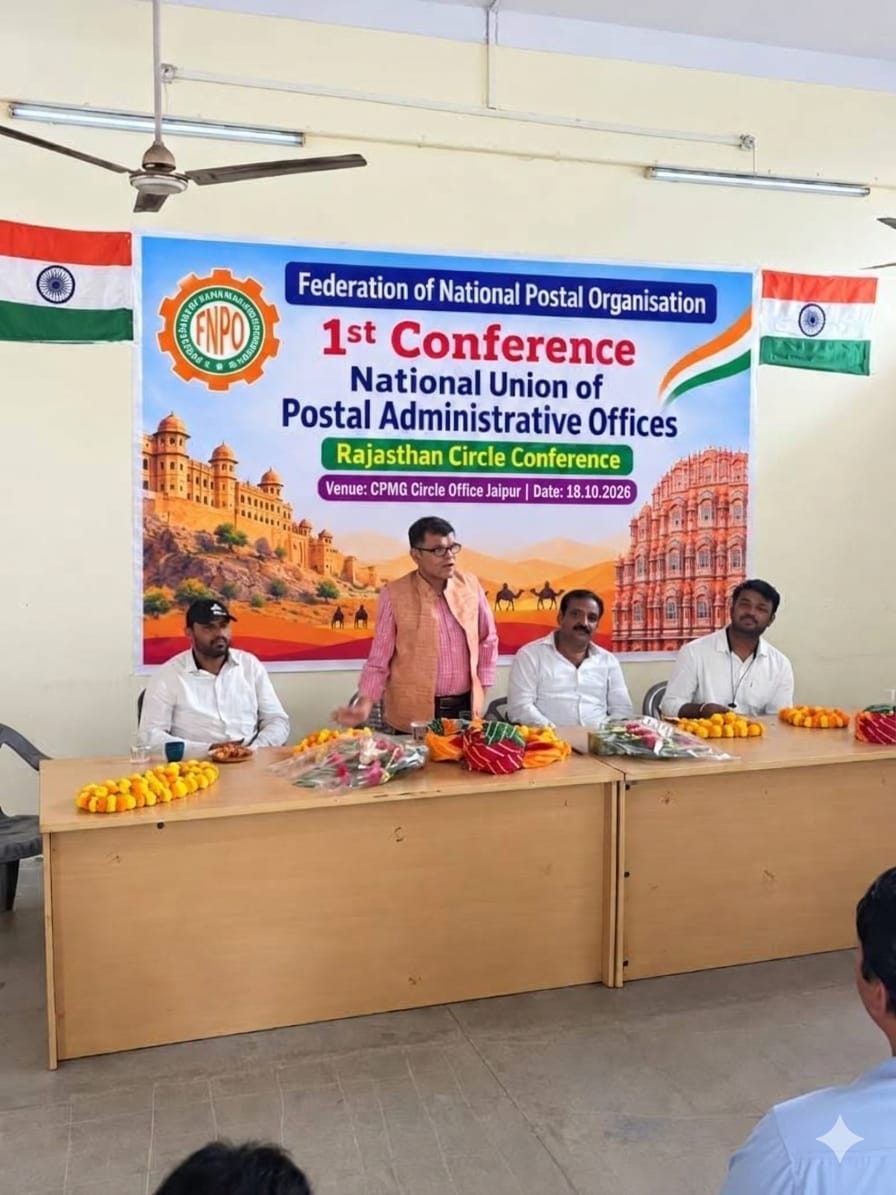 First Circle Conference of "National Association of Postal Administrative Offices" (FNPO) held at Jaipur GPO, Rajastan
SG FNPO Sivaji Vasireddy, CS NAPEc A R Godara, Harish CHQ NAPEc, Kundan Gujarat Admin union CS attended as Guests and addressed the conference. From administration Sri Pawan kumar DPS HQRs greeted the conference. FNPO conveys best wishes to newly elected Admin union leaders of Rajasthan Circle.
17/10/2026
16/10/2026
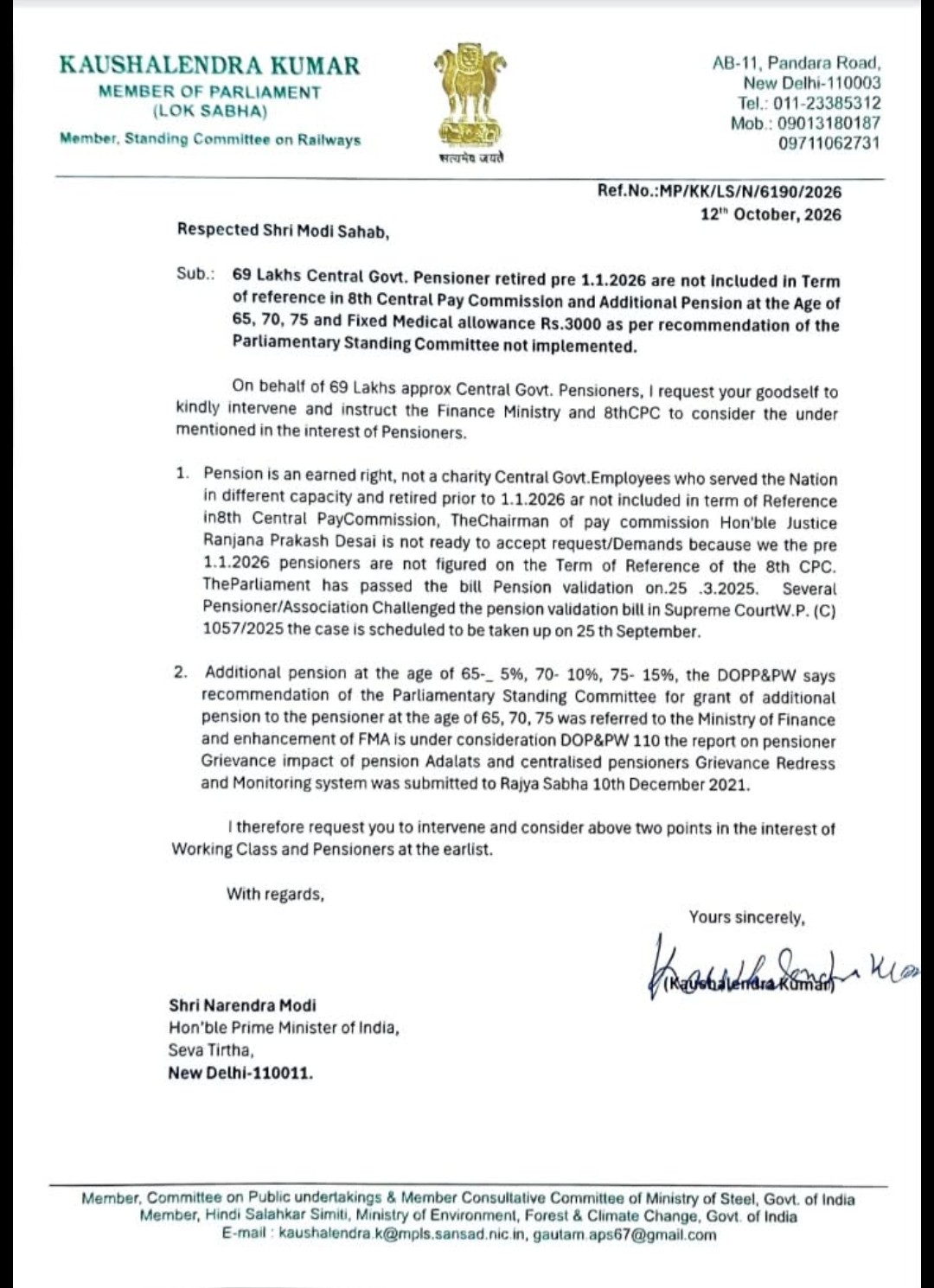
Work Shop for pension grivences National level on 18.10.26
Productivity Linked Bonus for the Accounting year 2025-26
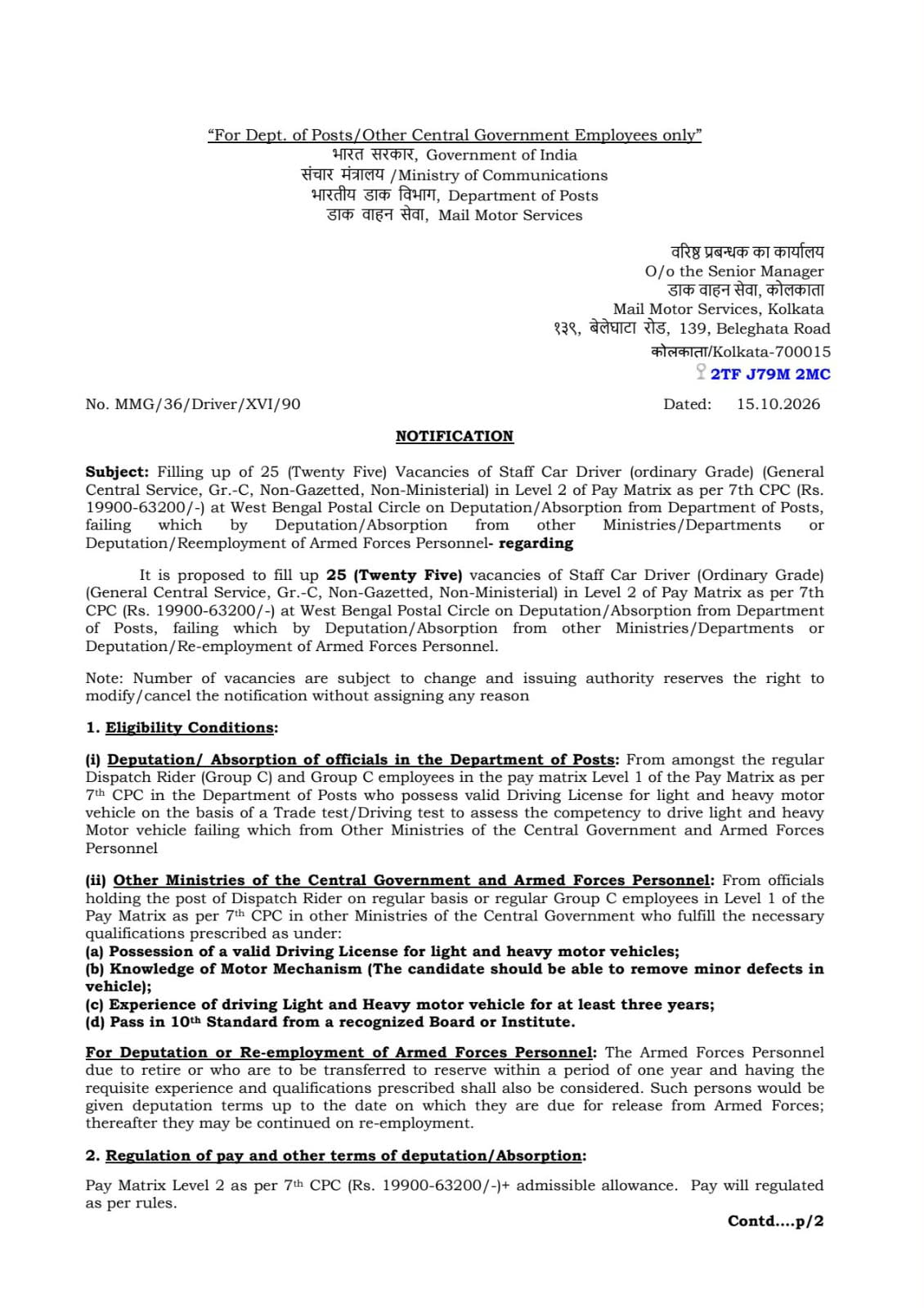
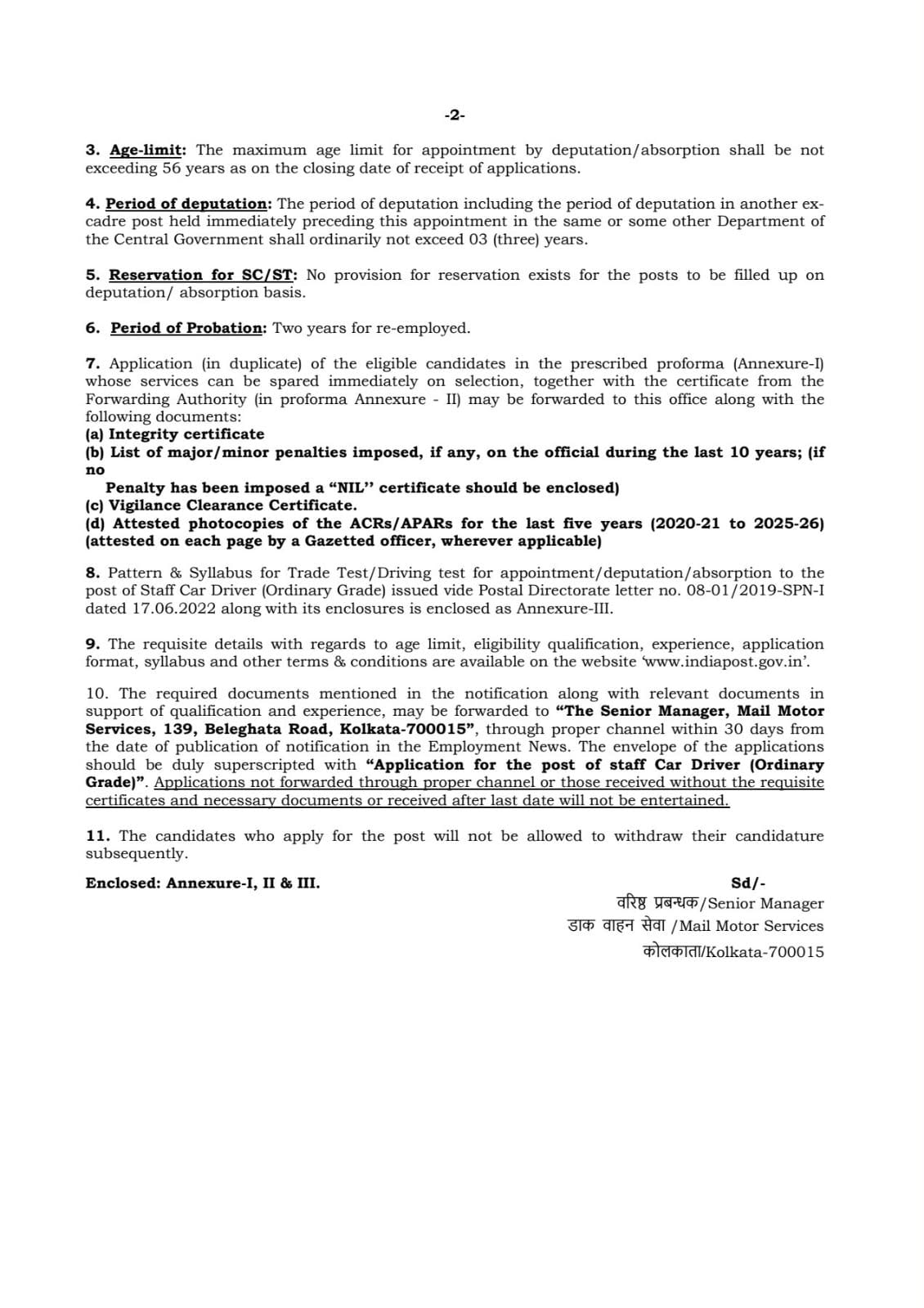
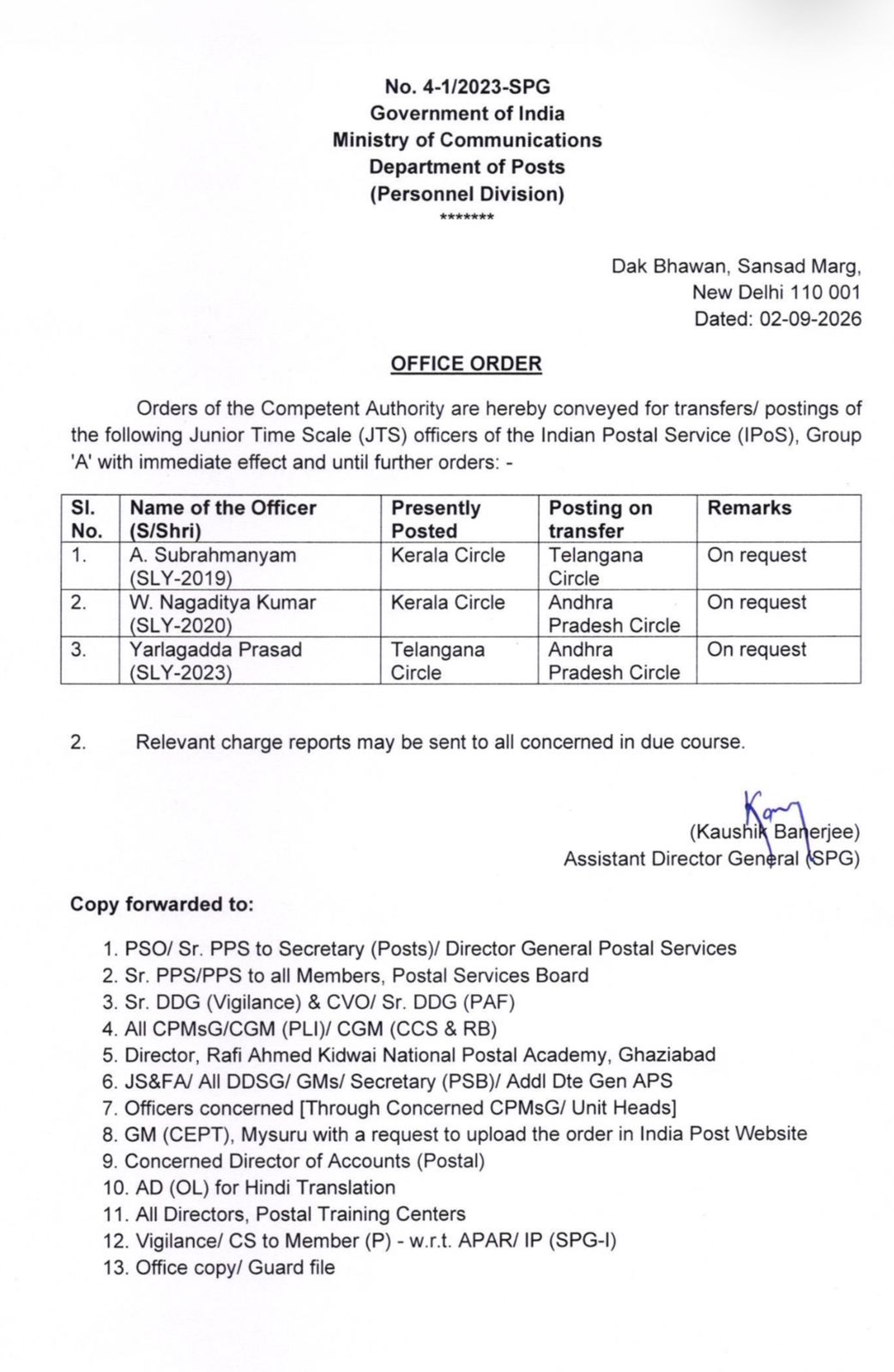
transfers/ postings of the officers of the Indian Postal Service, Group 'A'
Redistribution of JAG/SAG-Ievel posts across the Department of posts in alignment with the rebalancing Of administrative units
Centralized cadre management of IP/ASP – modalities for repatriation of IP/ASP on field service to APS.
Inter-Circle transfer of officers in the cadre of Assistant Superintendent of Posts to the Postal Circle
15/10/2026
Preventive measures for wrongful/excess payments to CG employees
Dear allBonus to Postal employees including GDS 60 days ceiling 7000 file approved by Finance Ministry and DoP will issue order today or tomorrow.
Sivaji Vasireddy Secretary General FNPO
14/10/2026
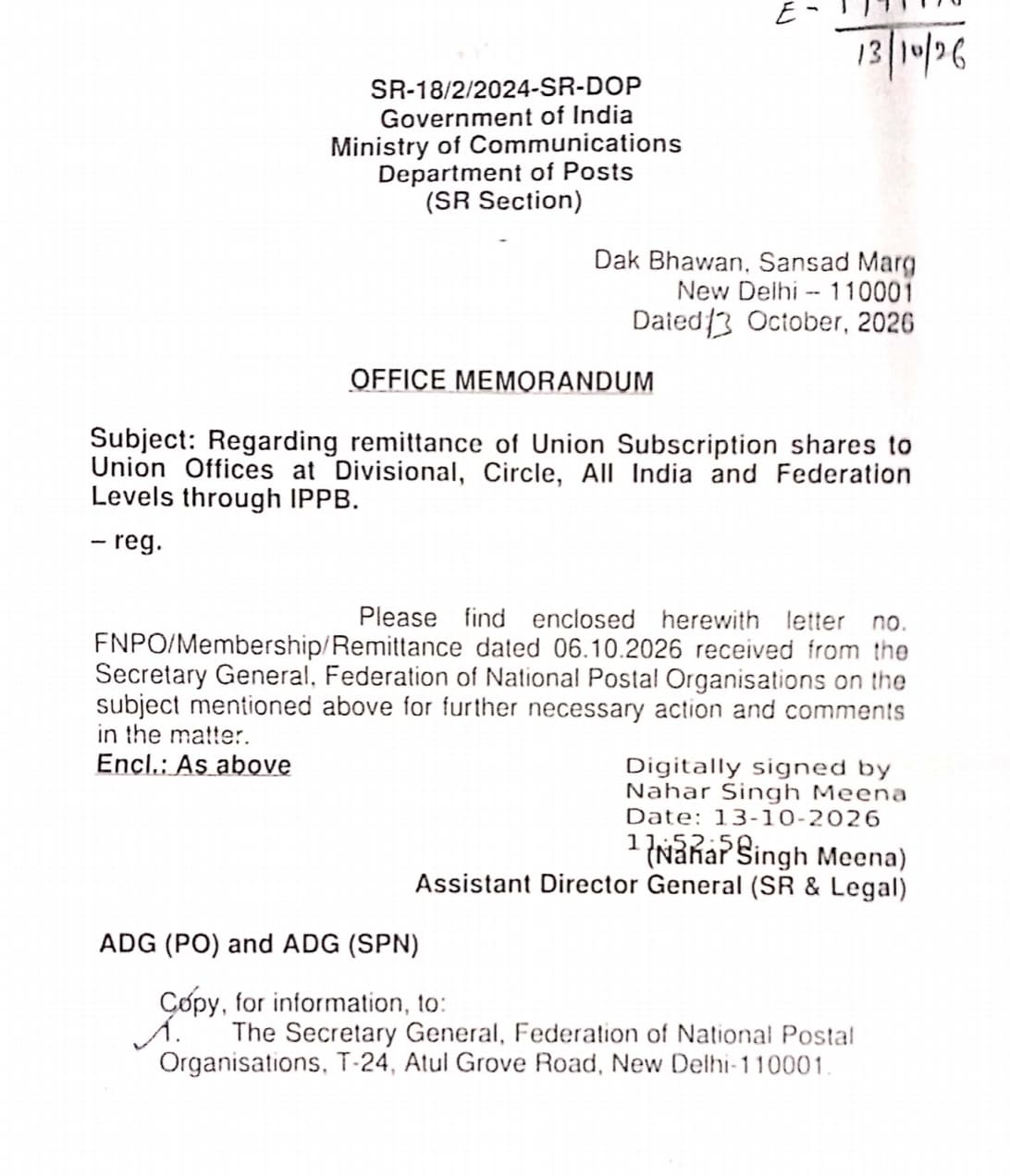
FNPO demanded for remittance of quota through EMO or Payroll
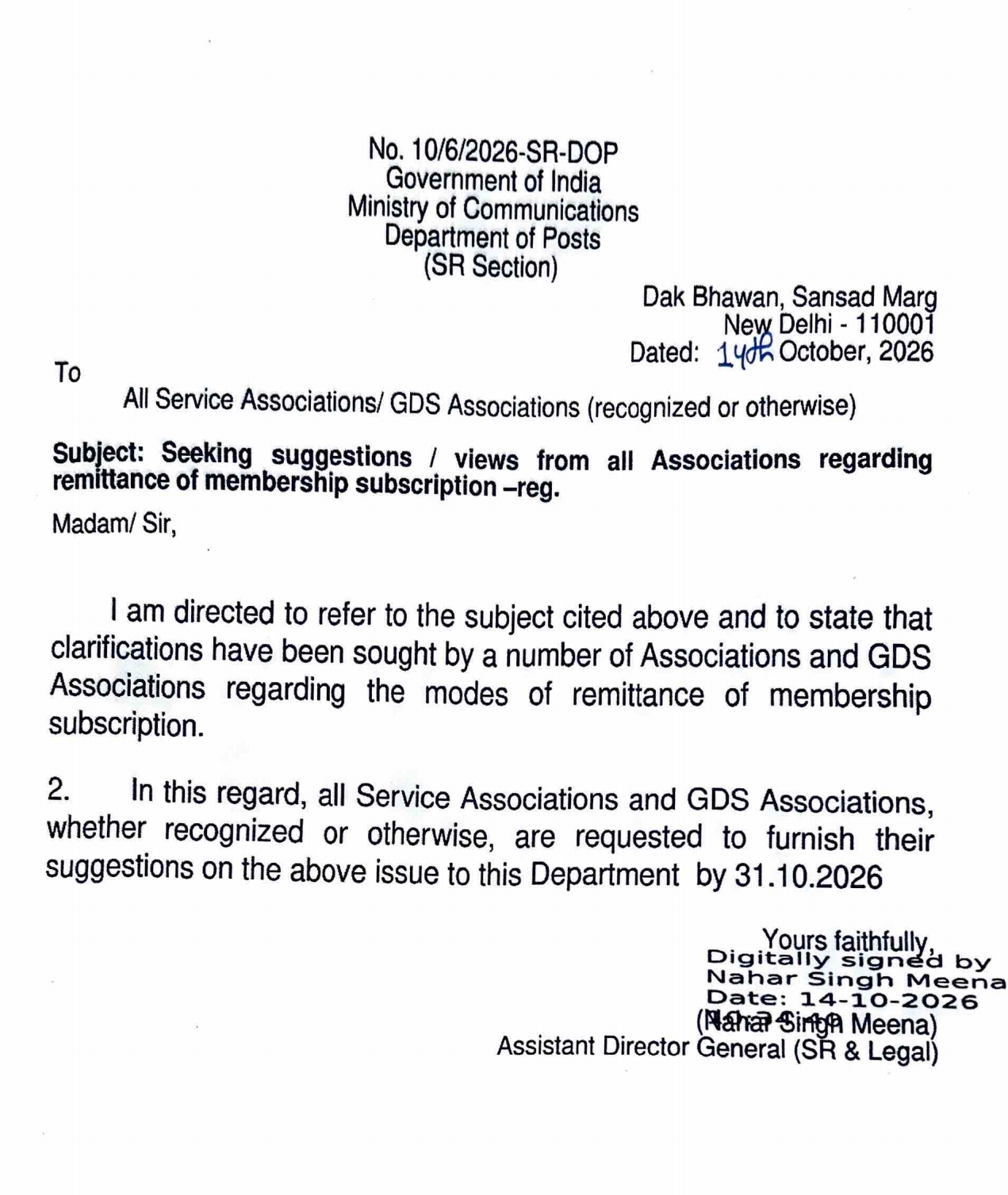 Asked views from all unions by 31.10.26
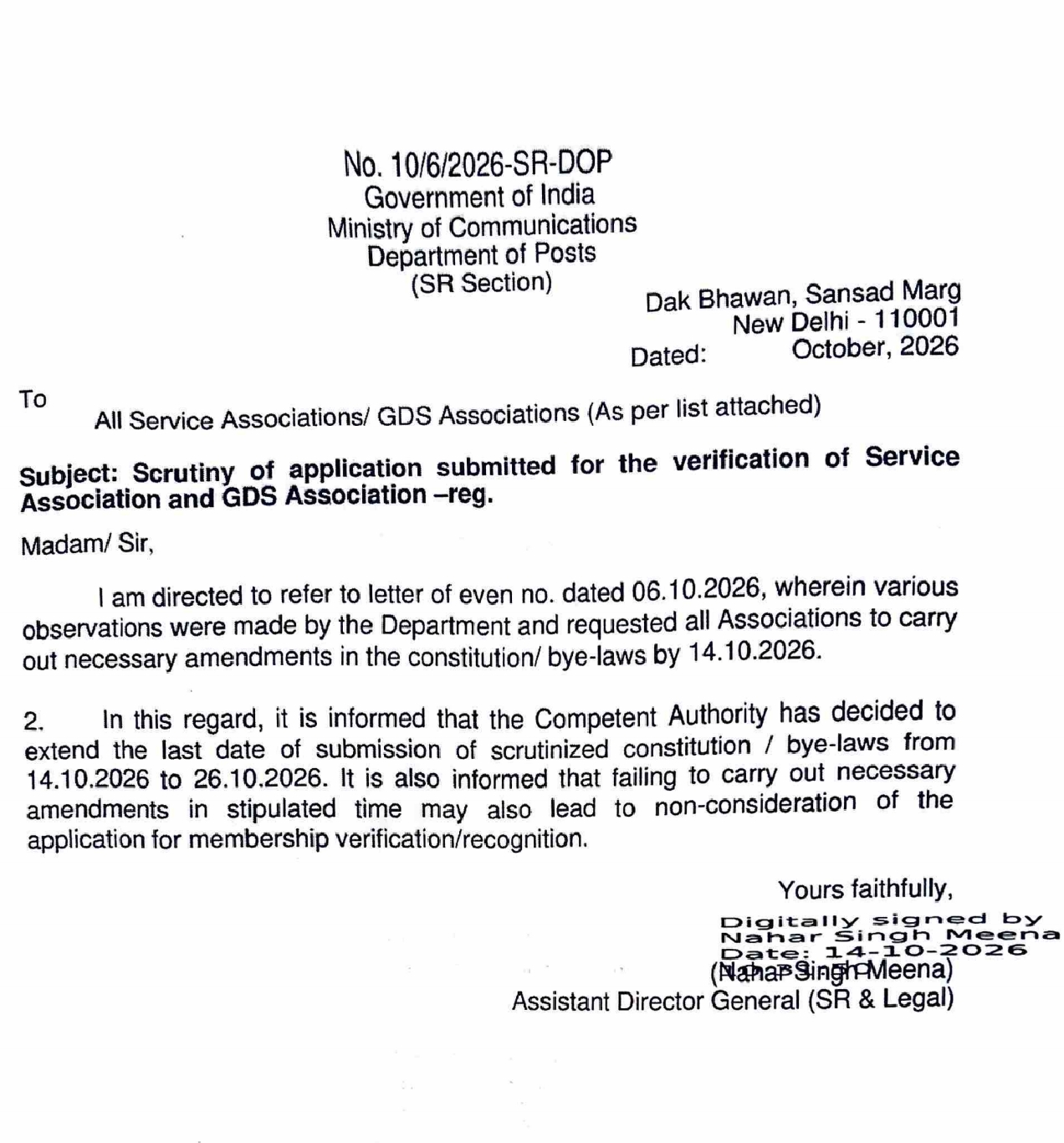 Constitution modification time extended up to 26.10.2026 in case of Membership verification 2026
13/10/2026
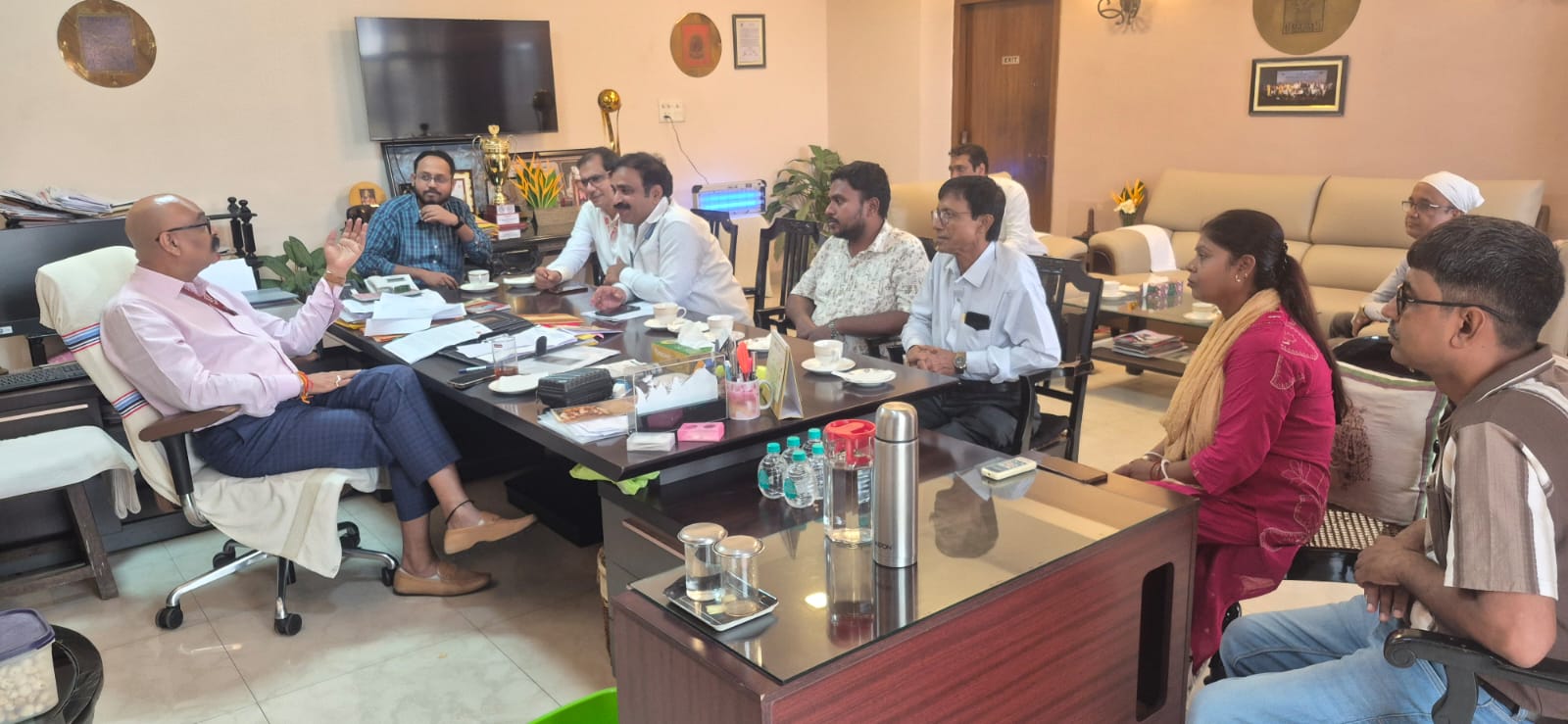
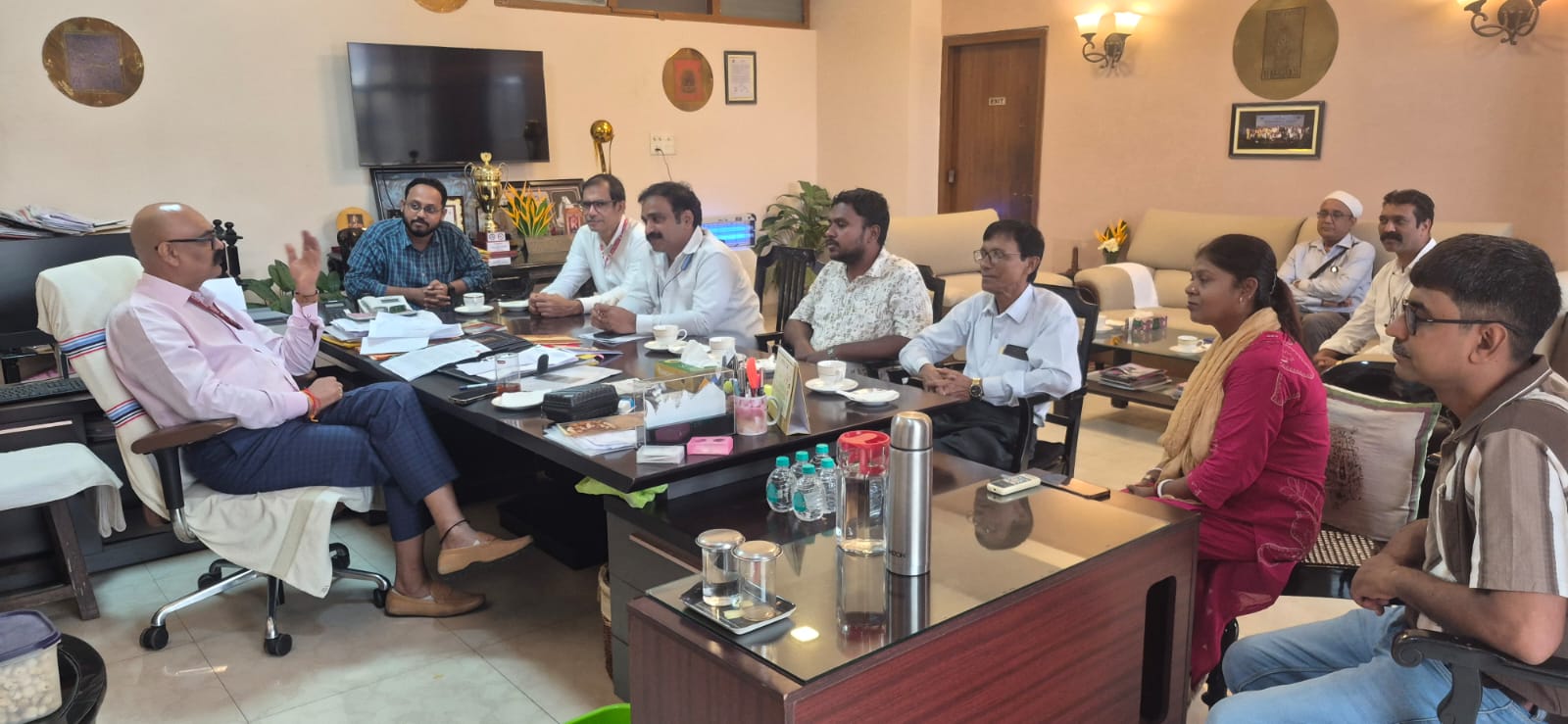 The SG FNPO and team from the West Bengal circle leaders had a very fruitful meeting with Sri Ashok Kumar ji, the Chief Postmaster General of the WB circle in Kolkata. Great discussions were held!
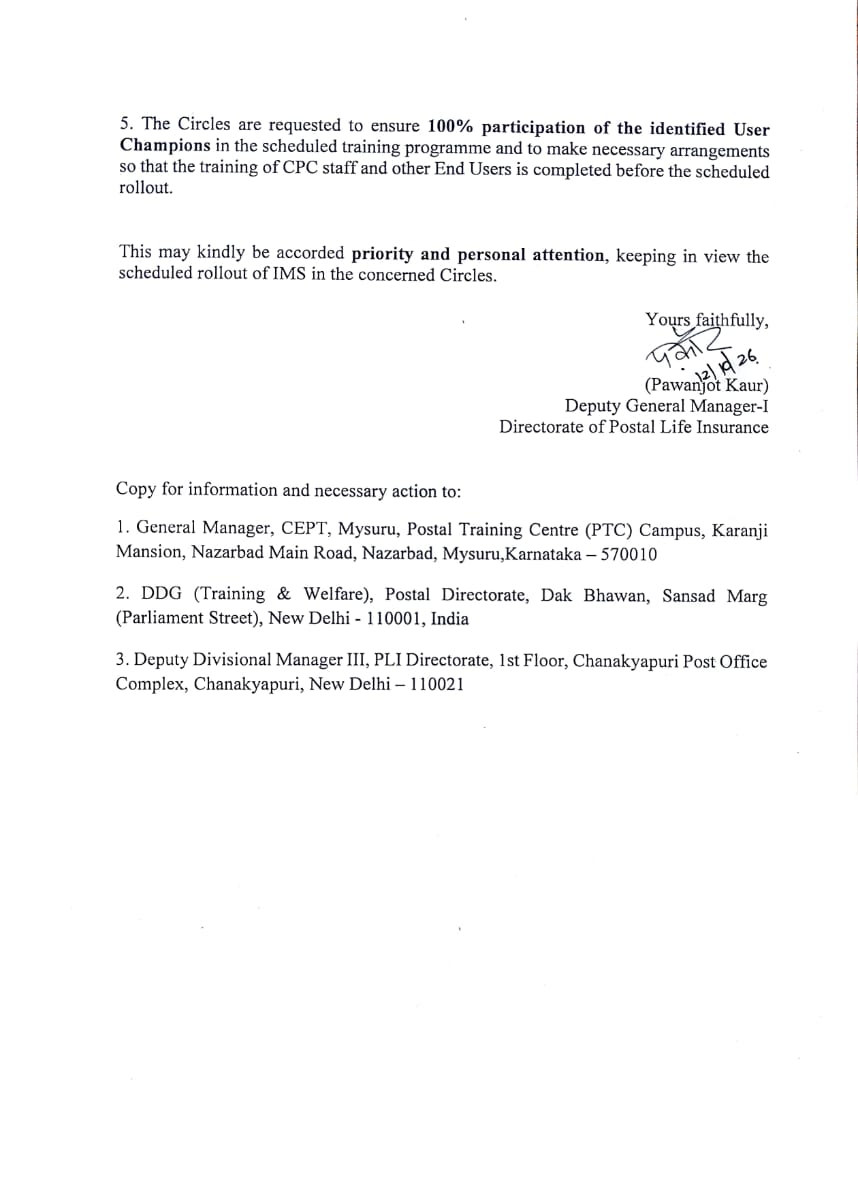 🏅 HEARTY CONGRATULATIONS! GOLD MEDAL WINNER 🏅
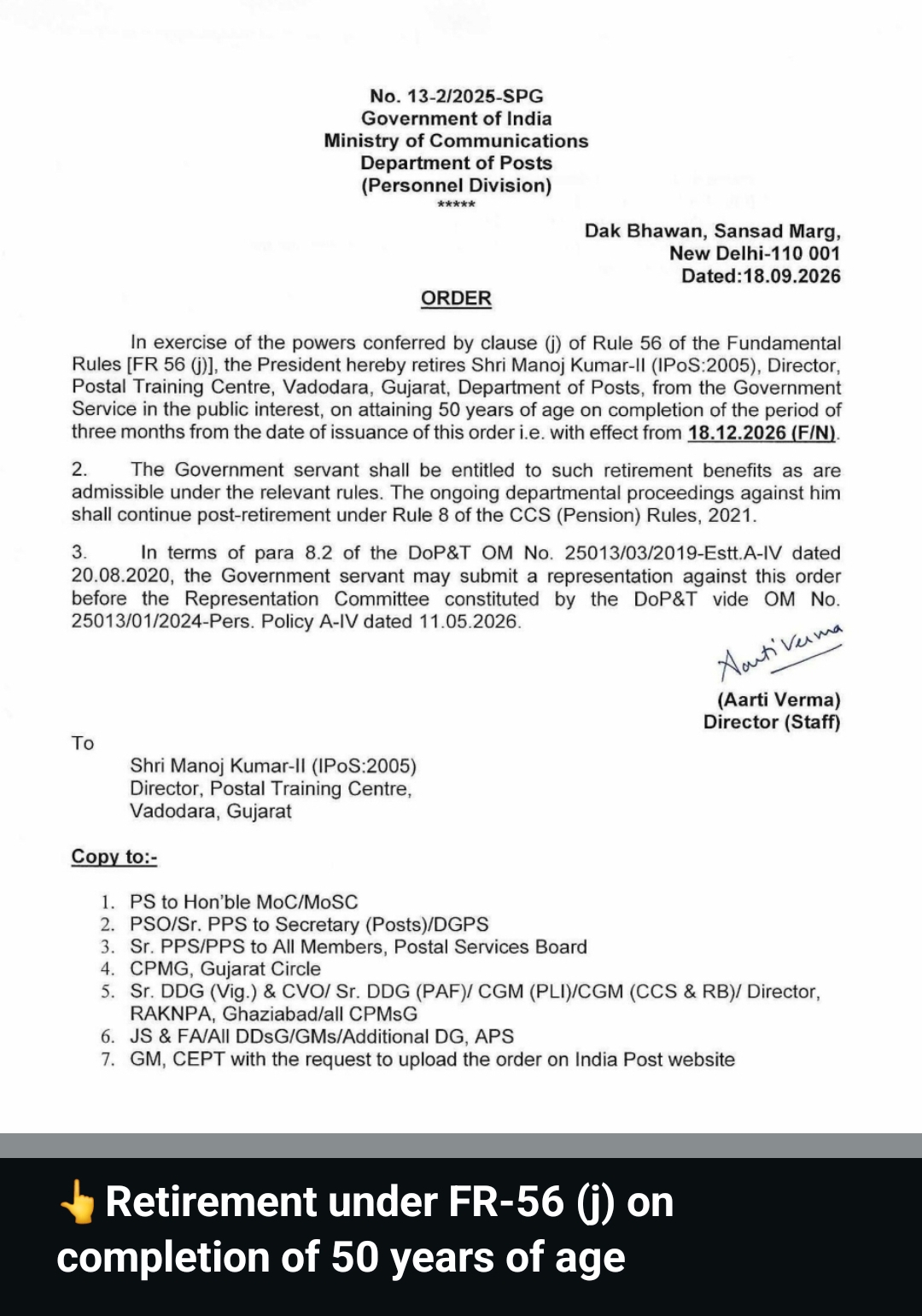
💐 The entire FNPO family proudly congratulates Mr. Mihir Soni, Postal Assistant, Udaipur, and FNPO member, for winning the GOLD MEDAL at the All India Postal Department Weightlifting Tournament 2026, held at Lucknow on 13.10.2026.
🏋️ Outstanding Achievement:
- Competition: All India Postal Department Weightlifting Tournament 2026>
- Achievement: 🥇 Gold Medal>
- Body Weight: 65 kg>
- Total Weight Lifted: 211 kg>
Your remarkable achievement reflects your dedication, determination, discipline and sporting excellence. You have brought pride and honour to the Department of Posts and the entire FNPO family.:
Heartiest congratulations, Mihir Soni! 💐💐 May you achieve many more milestones and bring greater glory to the postal fraternity.
With pride and best wishes,
Sivaji Vasireddy
Secretary General, FNPO
12/10/2026
Rationalization of Administrative Units across Postal Circle for Enhancing Administrative Efficiency, Business Development and Revenue Generation in Karnataka Postal Circle
Rationalization of Administrative Units across Postal Circles for Enhancing Administrative Efficiency, Business Development and Revenue Generation in "Uttar Pradesh Circle”.
Rationalization of Administrative Units across Postal Circles for Enhancing Administrative Efficiency, Business Development and Revenue Generation in West Bengal Circle
Rationalization Of Administrative Units across Postal Circles for Enhancing Administrative Efficiency, Business Development and Revenue Generation in i'Gujarat Circle'.
Order for Rationalization of Administrative Units across Postal Circles for enhanching Administative Efficiency, Business Development and Revenue Generation in Bihar Circle.
Rationalization of Administrative Units across Postal Circles for Enhancing Administrative Efficiency, Business Development and Revenue Generation in 'Punjab Circle'.
Rationalization of Administrative Units across Postal Circles for Enhancing Administrative Efficiency, Business Development and Revenue Generation in Maharashtra Circle.
Order for Rationalization of Administrative Units across Postal Circles for Enhancing Administrative Efficiency, Business Development and Revenue Generation in A.P. Circle.
Rationalization of Administrative Units across Postal Circles for Enhancing Administrative Efficiency, Business Development and Revenue Generation in Tamil Nadu Circle.
Rationalization of Administrative Units across Postal Circles for Enhancing Administrative Efficiency, Business Development and Revenue Generation — "Kerala Circle" regarding.
Rationalization of Administrative Units across Postal Circles for Enhancing Administrative Efficiency, Business Development and Revenue Generation in 'Jharkhand Circle'.
Rationalization Of Administrative Units across Postal Circles for Enhancing Administrative Efficiency, Business Development; and Revenue Generation in 'Uttarakhand Circle'.
11/10/2026
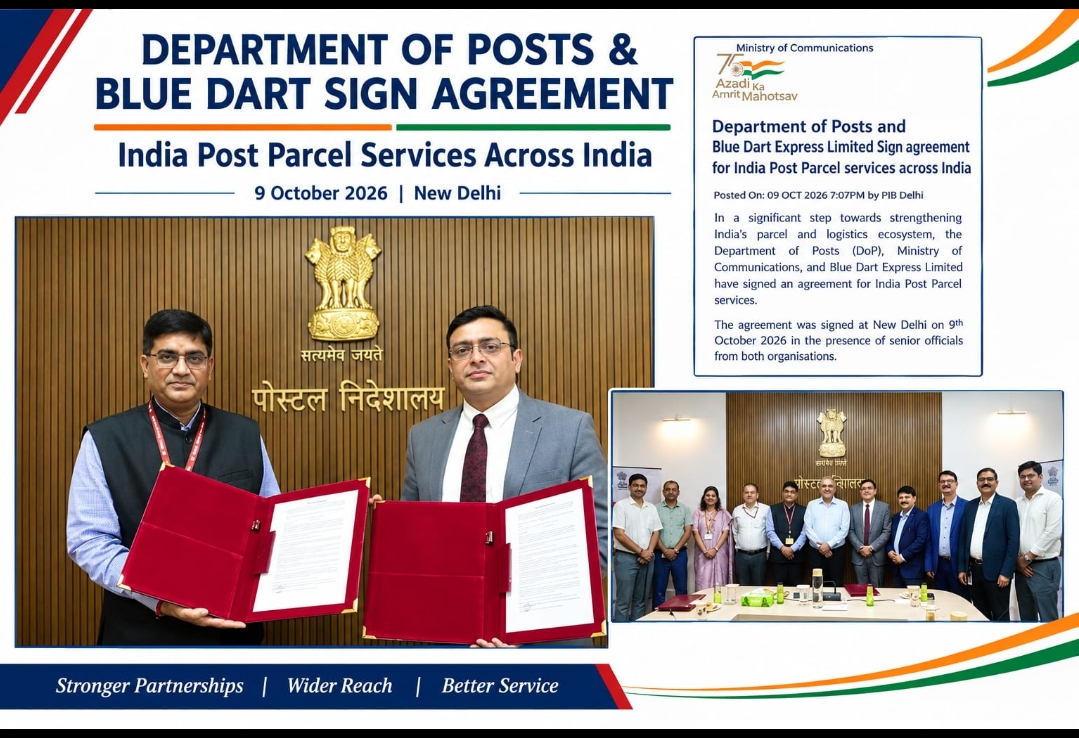 Department of Posts and Blue Dart Express Limited Sign agreement for India Post Parcel services across India
In a significant step towards strengthening India’s parcel and logistics ecosystem, the Department of Posts (DoP), Ministry of Communications, and Blue Dart Express Limited have signed an agreement for India Post Parcel services.
The agreement was signed at New Delhi on 9th October 2026 in the presence of senior officials from both organisations.
The partnership aims to leverage the unparalleled reach and trusted delivery network of the Department of Posts along with Blue Dart’s strong presence in India’s logistics sector to provide efficient, reliable and customer-centric parcel delivery solutions across the country.
Key Highlights of the Agreement
Nationwide Last Mile Reach: Blue Dart will utilize India Post’s extensive network for parcel delivery services across urban, semi-urban and rural areas, including remote and underserved regions.
Comprehensive Delivery Solutions: The services include delivery of prepaid and COD parcels, OTP-based delivery authentication and real-time shipment tracking.
Enhanced Customer Experience: The agreement focuses on faster deliveries, improved operational coordination and seamless technology integration for efficient parcel movement and delivery.
Support to E-commerce Growth: The collaboration is expected to further strengthen the logistics infrastructure supporting India’s rapidly growing e-commerce sector.
Postal Service Guide
Benefits to Blue Dart Express Limited
Blue Dart will gain access to DoP’s unparalleled network of 1.64 lakh Post Offices spread across the country. This partnership will allow Blue Dart to expand its logistics operations, improve delivery speed and meet the growing demands of India’s e-commerce sector, especially in remote areas.
Benefits to the Department of Posts
For the Department of Posts, the partnership will provide an opportunity to utilise its postal and parcel network for additional business volumes and strengthen its engagement with the organised logistics sector. The collaboration will also enable the Department to benefit from the operational experience and industry practices of a leading express logistics service provider.
About the Department of Posts
The Department of Posts, under the Ministry of Communications, operates the world’s largest postal network with over 1.64 lakh Post Offices across India. It plays a critical role in providing communication, logistics and financial services with a focus on driving e-commerce growth in India.
About Blue Dart Express Limited
Blue Dart Express Limited is an express logistics and distribution company providing delivery and logistics solutions across India. The company has an extensive domestic network and experience in serving businesses across sectors, including e-commerce and time-sensitive express logistics.
10/10/2026
09/10/2026
08/10/2026
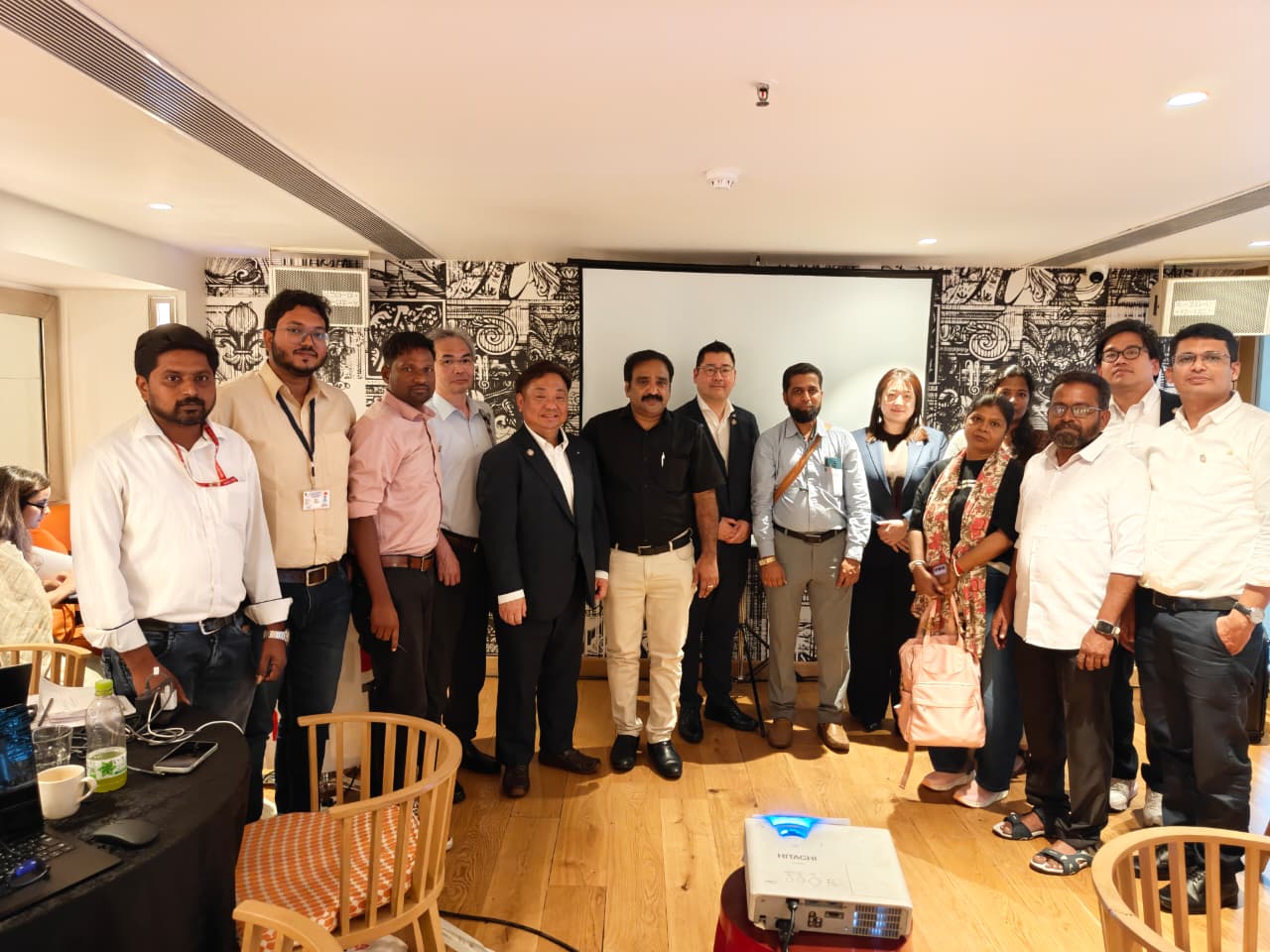
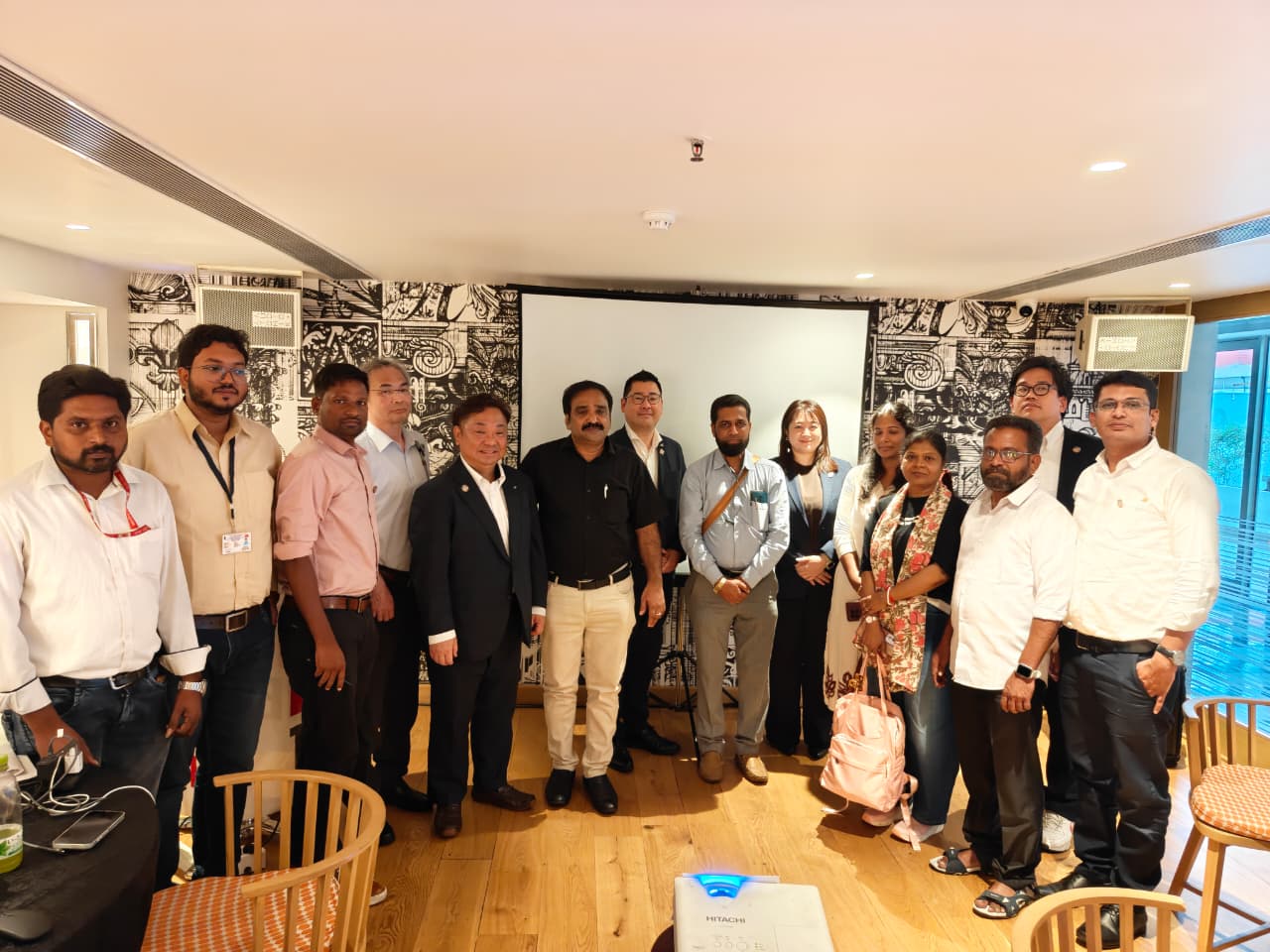
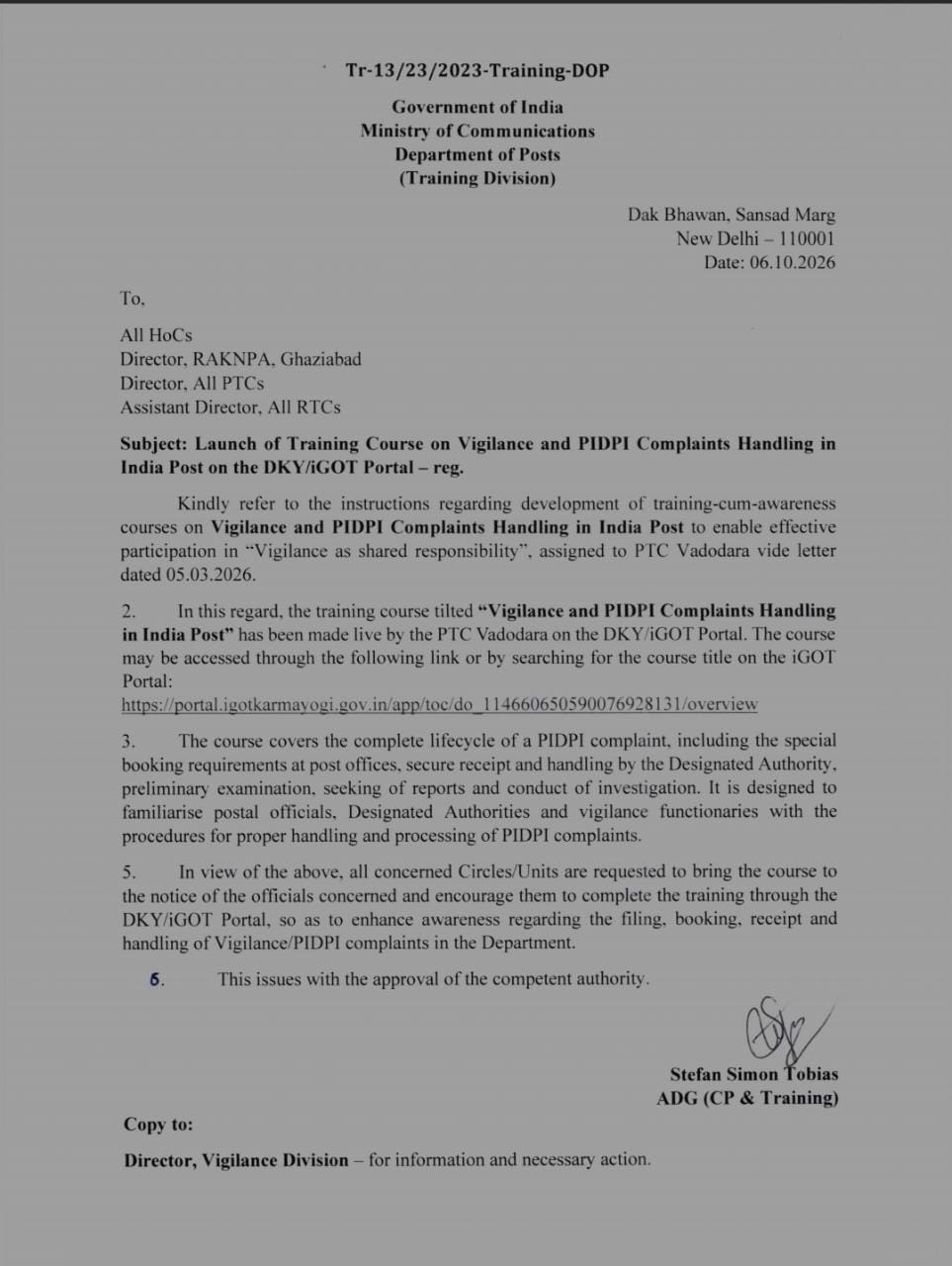 At The Park Hotel , Bangalore on 8.10.26 in UNI LCJ-ILC seminar.FNPO leaders and participants with Japan Unions delegates
07/10/2026
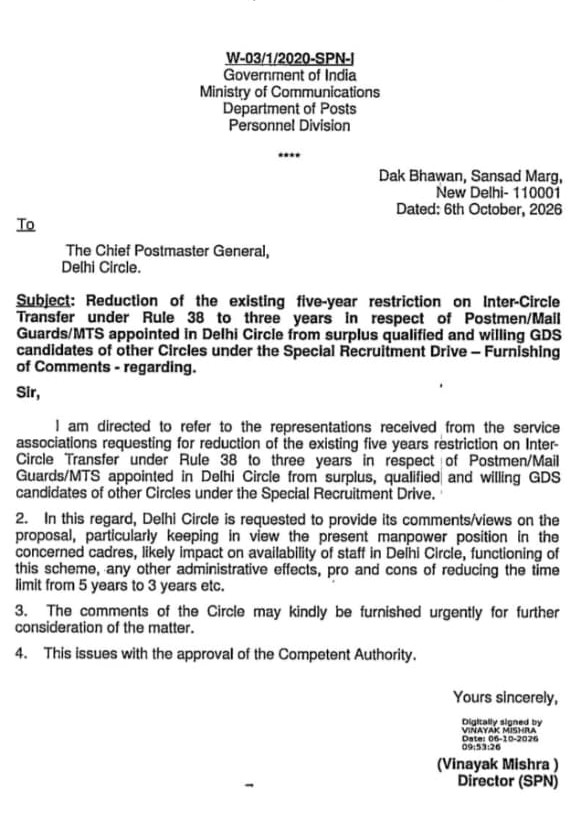 CPMG views called for for reduction of 5 years condition to 3 years
06/10/2026
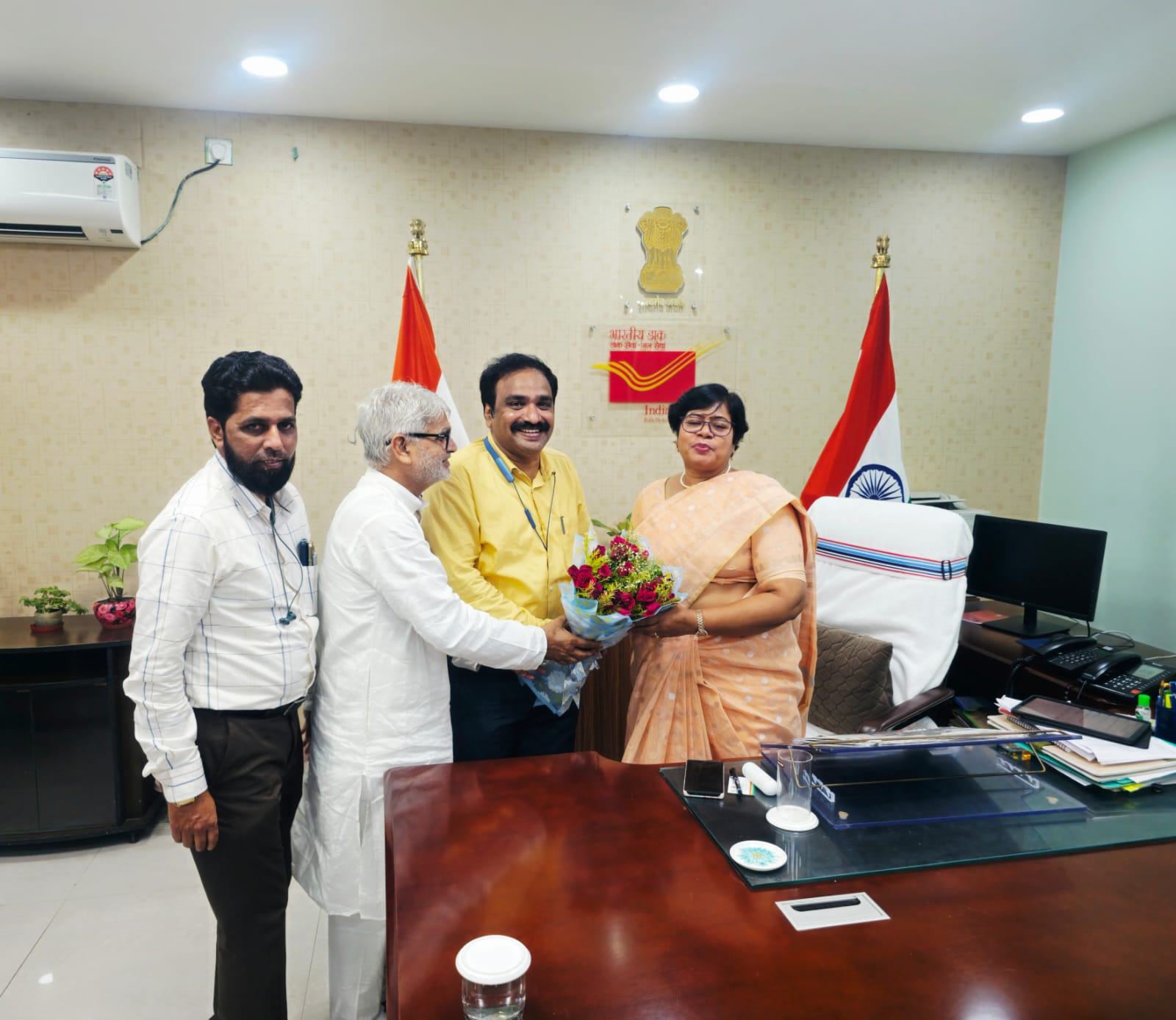 FNPO president and SG met CPMG Bihar on 5.10.26 along with Ex CS bihar NAPEc Mishra ji
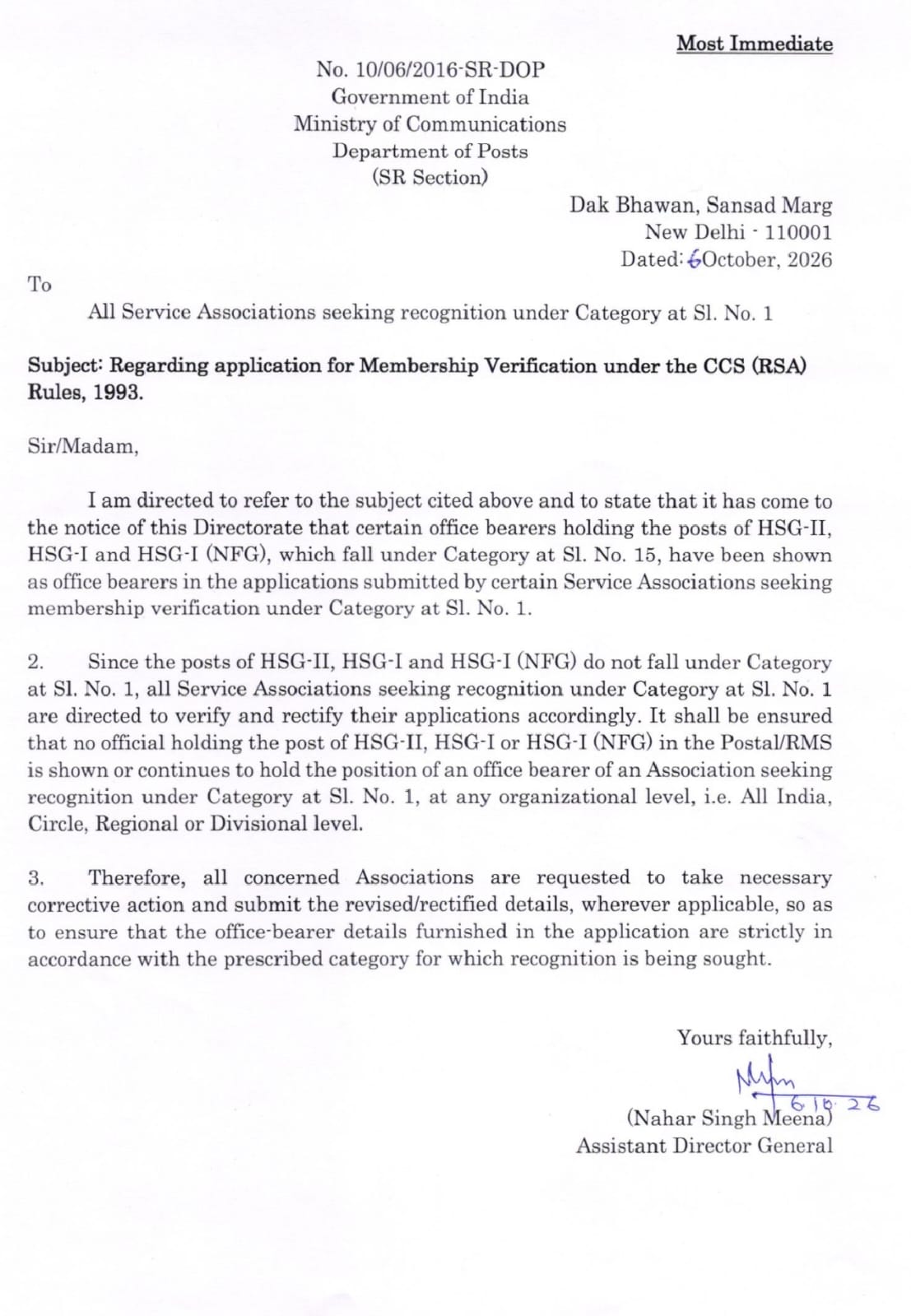
SG FNPO letter about clarification of Elected office post validity due to notification of new distinct category union
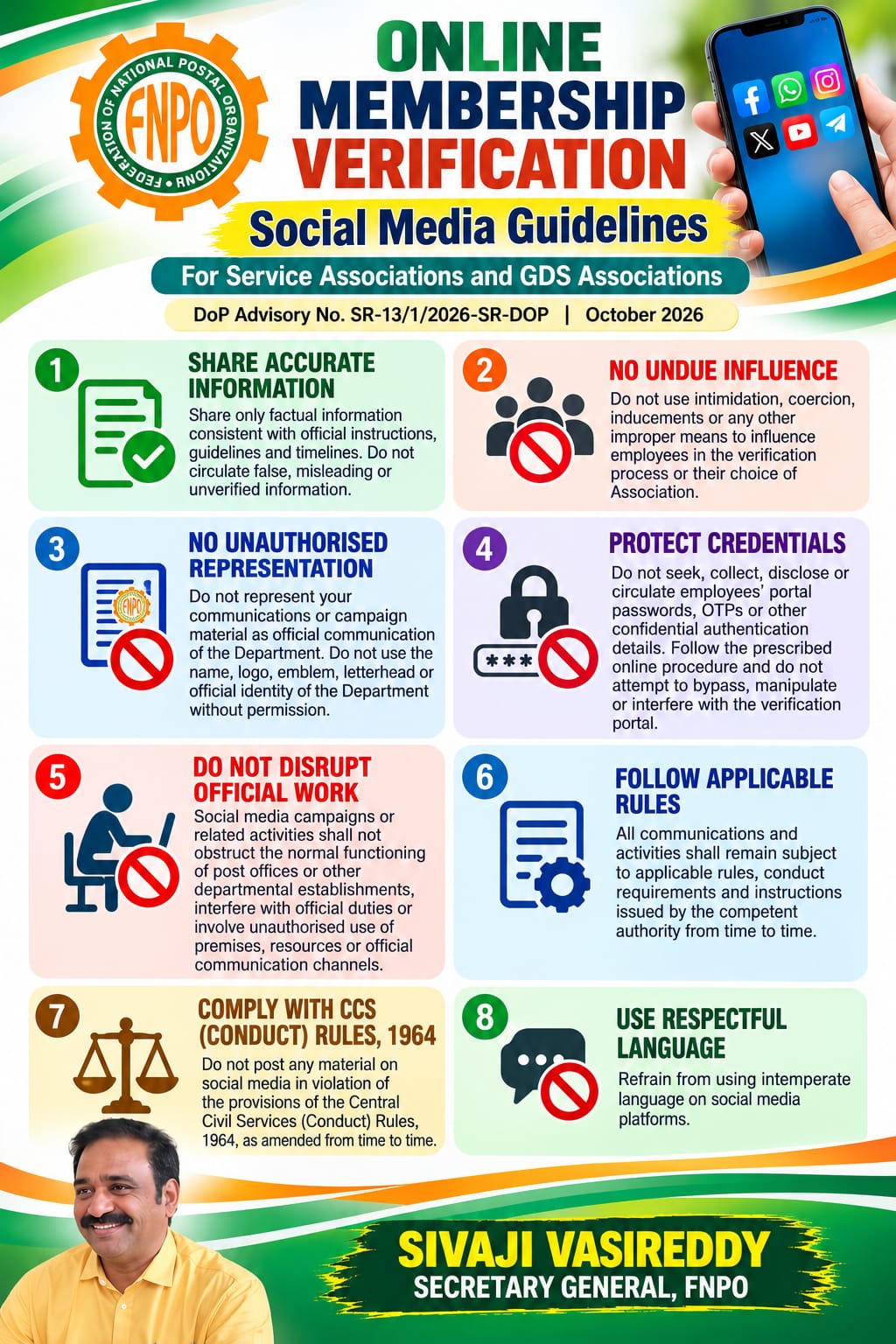
Scrutiny of application submitted for the verification of Service Associalion and GDS Association
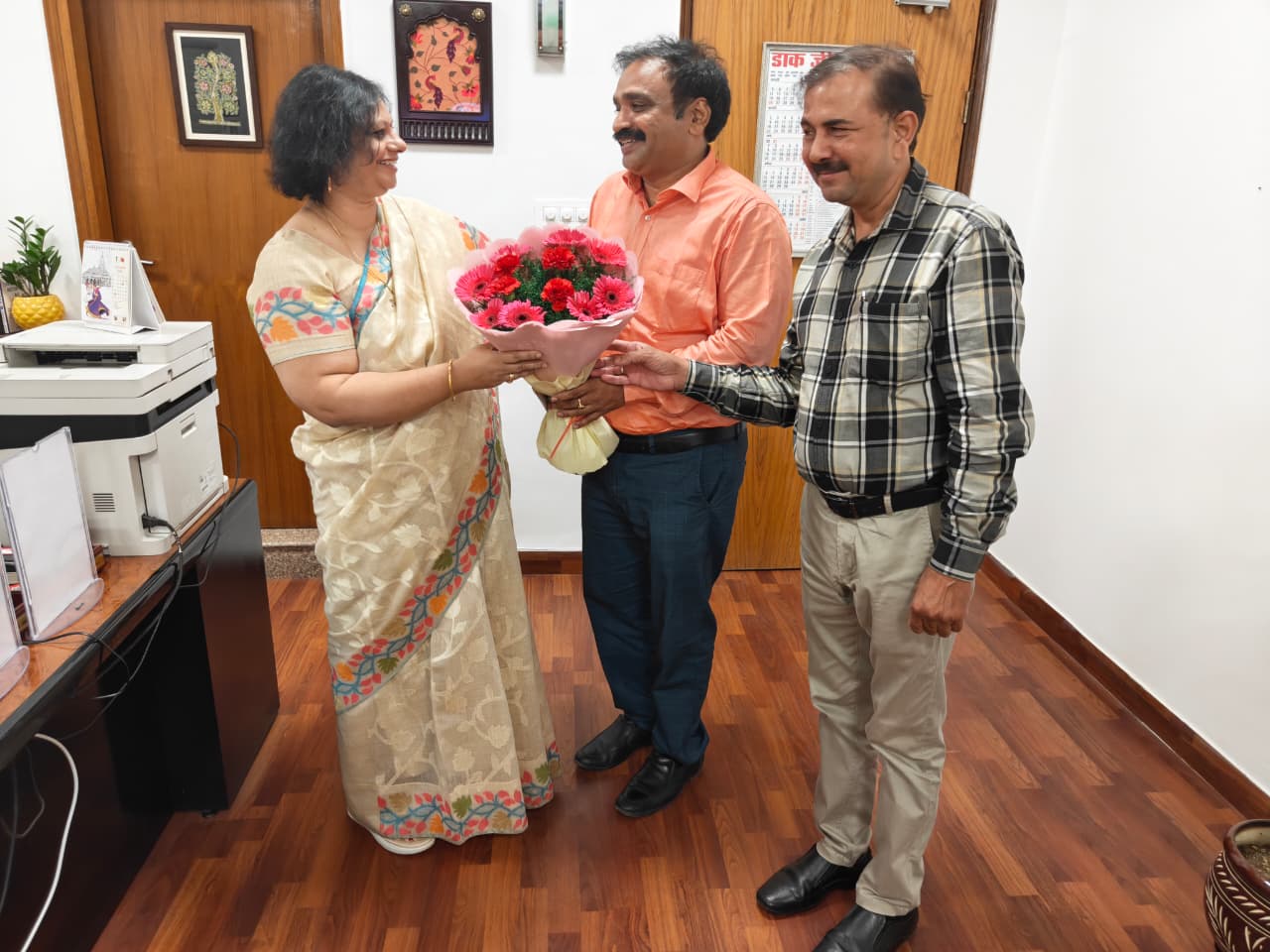 FNPO Extends Greetings to the New Director General Postal Services
On 6 October 2026, FNPO Secretary General Shri Sivaji Vasireddy and GS NUR4 Shri M. K. Sharma called on and extended their warm greetings to Ms. Manisha Sinha, IPoS (1992), on her assuming charge as the Director General Postal Services (DGPS), Department of Posts, on 1 October 2026.
They conveyed their best wishes to Ms. Manisha Sinha for a successful tenure and expressed the hope that her leadership will further strengthen the Department of Posts and contribute to the welfare and professional interests of postal employees.
Sivaji Vasireddy
Secretary General, FNPO
05/10/2026
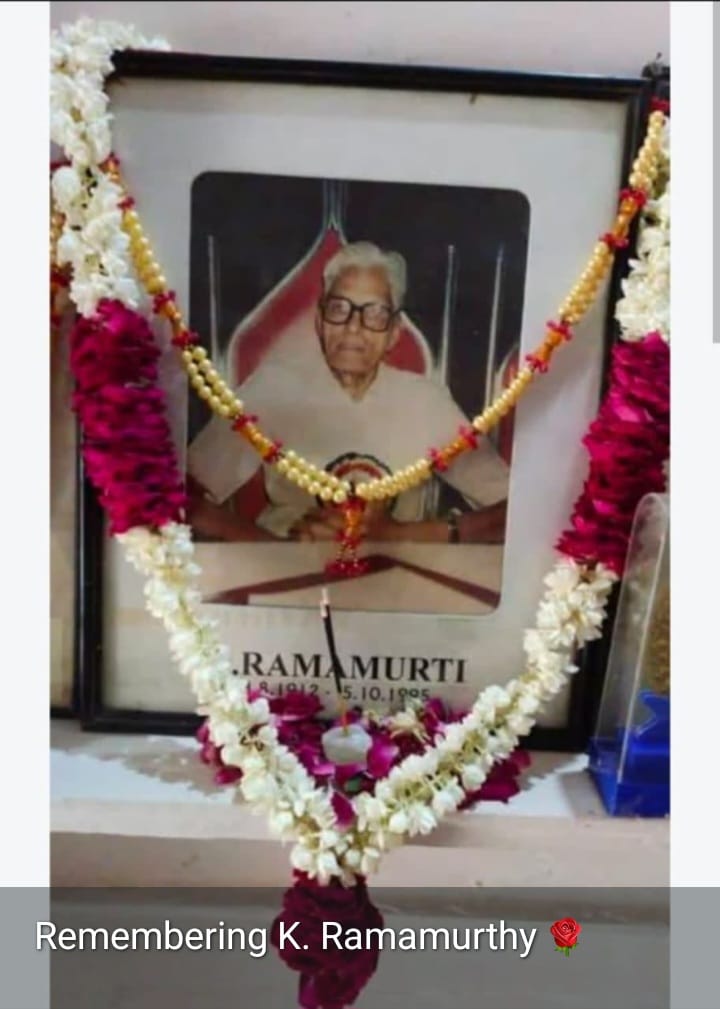 REMEMBERING OUR BELOVED LEADER
COM. K. RAMAMURTHI
REMEMBERING OUR BELOVED LEADER
COM. K. RAMAMURTHI5 October — Memorial Day
On this solemn day, I join thousands of comrades and colleagues in remembering with profound respect, deep emotion and heartfelt gratitude our beloved leader Com. K. Ramamurthi, who left us on 5 October 1995.
Com. Ramamurthi was not merely a leader; he was a source of strength, courage, inspiration and guidance to the entire movement. A visionary and fearless trade union leader, he stood steadfastly for justice, dignity and the legitimate rights of workers and dedicated his life to strengthening the organisation and serving the working class.
His simplicity in life, courage in conviction, discipline in action, spirit of sacrifice and unwavering commitment to the cause of employees left an enduring impression on generations of comrades. His words gave us confidence, his struggles showed us the path, and his principles continue to guide us in every challenge we face.
Three decades have passed since his physical departure, but time has never diminished his presence in our hearts. His legacy lives on through the ideals he cherished, the organisation he strengthened and the generations of workers he inspired.
On this memorial day, we bow our heads in solemn respect and pay our heartfelt and reverential homage to our beloved leader Com. K. Ramamurthi.
Leaders may leave us physically, but great leaders never truly die. They live forever through their ideals, their struggles, their sacrifices and the path they leave behind for generations to follow.
Com. K. Ramamurthi Amar Rahe!
With profound respect and eternal gratitude,💐🙏
In memory of K.R... FNPO launching "FNPO Aap" to deliver services to members faster with more accountability through technology.
Sivaji Vasireddy
Secretary General
FNPO
Download FNPO Union App
FNPO Union App Standard Operating Procedure and Training Manual
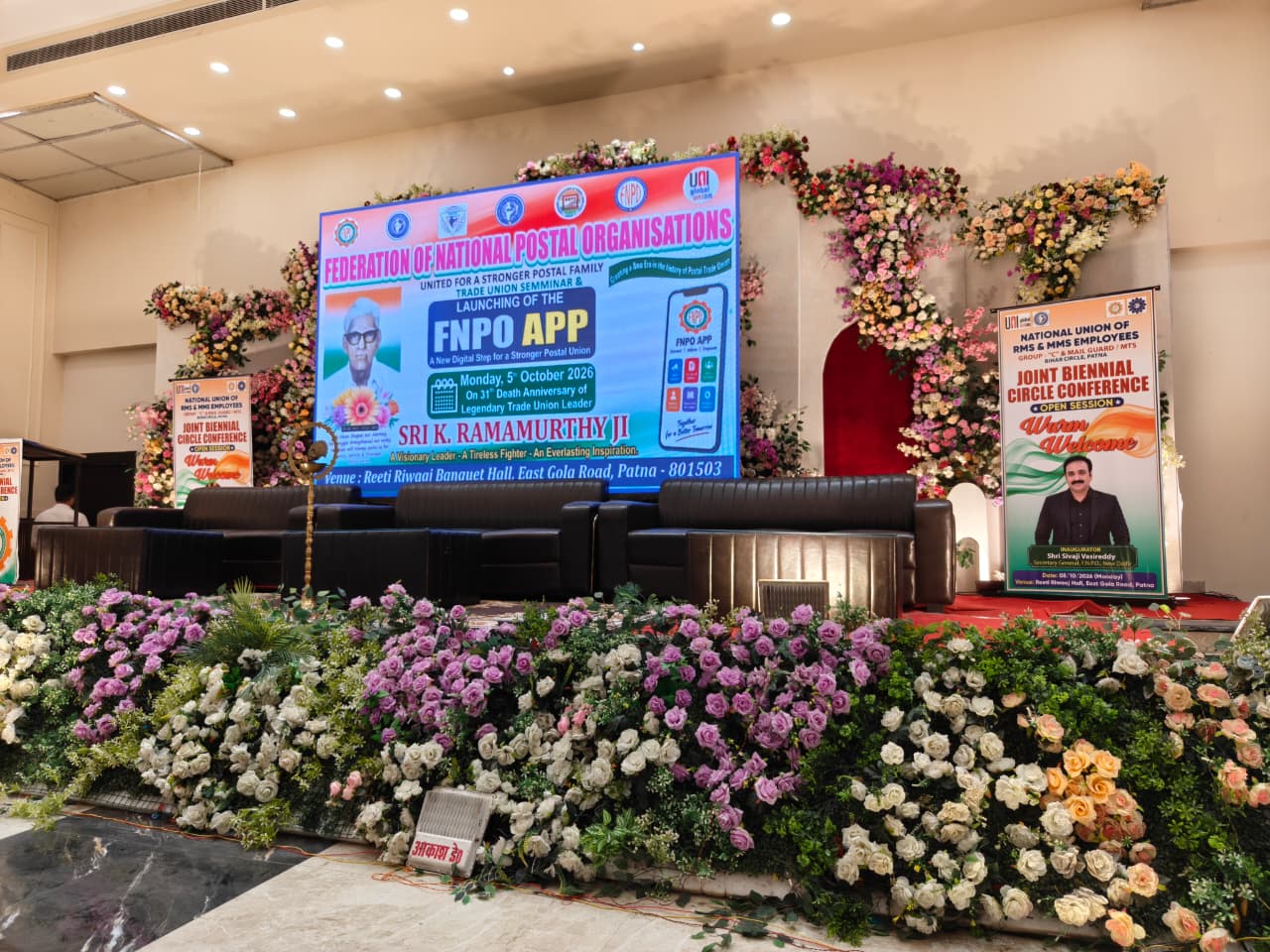
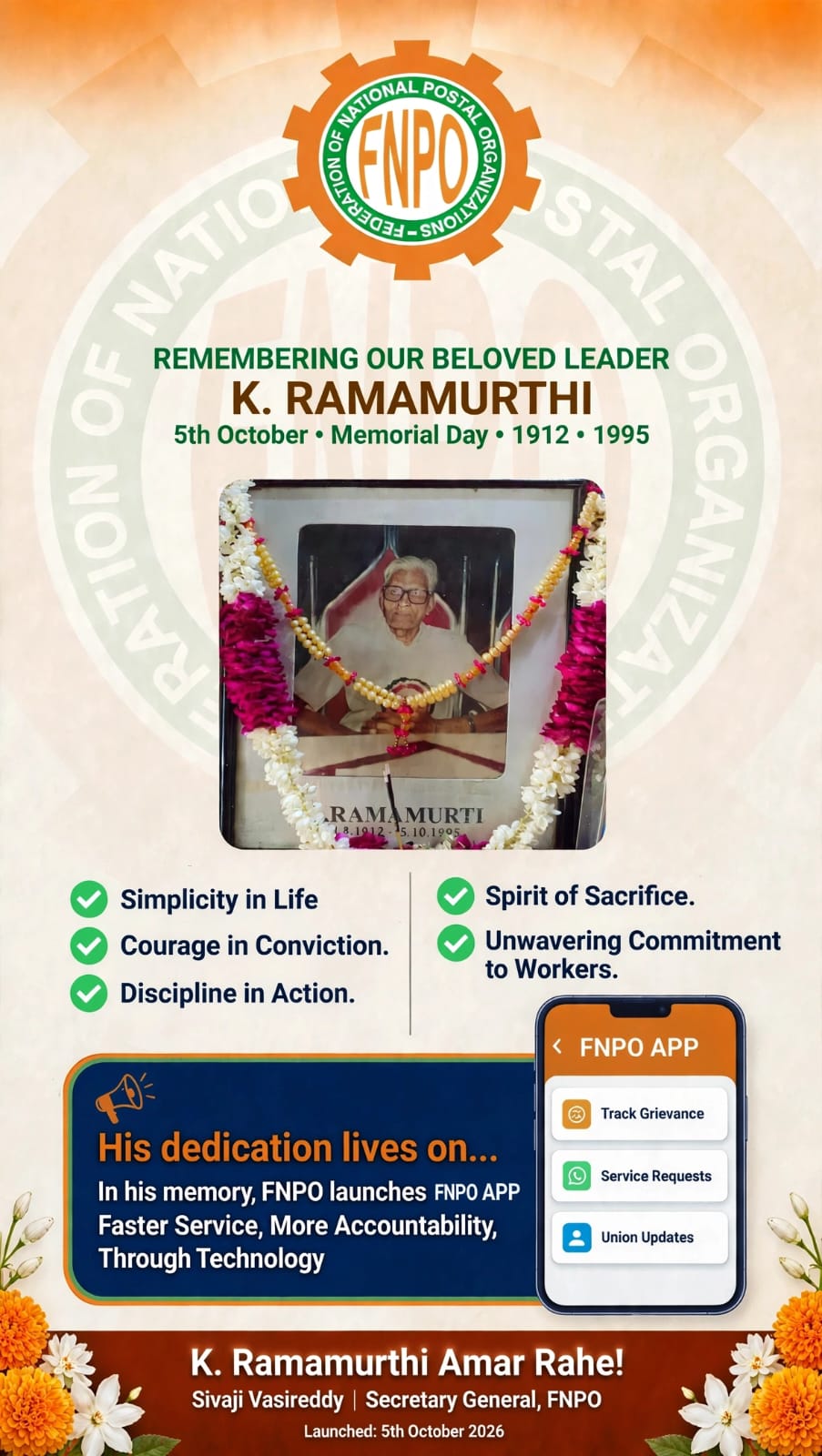 A New Digital Era for FNPO – FNPO Union App Officially Launched at Patna on 5.10.2026
Dear Colleagues,
It gives me immense pleasure and pride to announce the official launch of the “FNPO Union App” at Patna, on the occasion of the FNPO–NURMS Joint Circle Conference and Trade Union Seminar of FNPO-affiliated unions.
This is not merely a mobile application. It is a new digital platform to bring FNPO and its members closer, faster and more effectively. The App has been designed to strengthen communication, transparency, member participation and service delivery across the entire FNPO organisational structure.
Key Features of the FNPO Union App
🔹 Easy Member Registration & Login – registration without waiting for approval, with a one person–one ID system.
🔹 Raise Your Requirement – members can directly raise queries, suggestions, complaints and requests, which can be answered, escalated and cleared through the organisational hierarchy.
🔹 Instant Circular & Notification Alerts – important circulars, notifications and union letters can reach the concerned members directly through phone alerts, ensuring that important information is never delayed or missed.
🔹 Transfer Request Facility – dedicated facilities for Rule 38, Rule 3 for GDS and Mutual Transfers.
🔹 Mutual Transfer Matching – the App can identify matching requests based on the prescribed conditions, with current matching information available to members and secretaries.
🔹 Office-Bearer Management – systematic nomination and management of office-bearer posts through the organisational hierarchy.
🔹 Registration & Organisational Reports – Secretaries can view registration data and organisational information for their respective areas.
🔹 All-India Organisational Connectivity – the App follows the FNPO hierarchy from Division → Region → Circle → All India, providing a common digital platform for the organisation.
🔹 Secure & Centralised Data – all users access the same union server, ensuring that registrations, queries, replies and circulars remain synchronised across the organisation.
🔹 Password & Role Management – structured authority for password resetting and administrative functions at different levels.
🔹 Future Expansion – the present version is an Android platform, with further development envisaged.
The latest SOP, Version 1.3 dated 5 October 2026, records the Dashboard with four principal functions—Raise Your Requirement, View Queries, View Circulars and Transfer Request—and confirms the Rule 38, Rule 3 and Mutual Transfer workflows.
A Tribute to Our Founder – K. Ramamurthi💐💐
There is also a deeper significance to this launch.
Today, 5 October, marks the death anniversary of our beloved founder and visionary leader, Comrade K. Ramamurthi, who left us on 5 October 1995.
Therefore, I dedicate this FNPO Union App to the immortal memory of Comrade K. Ramamurthi.
He belonged to an era when communication was difficult, resources were limited and the struggle for employees' rights demanded enormous personal commitment. Yet he laid the foundation for an organisation that continues to stand firmly for justice, dignity, unity and the legitimate rights of postal employees.
From the organisational foundation laid by our pioneers to today's digital transformation, FNPO continues to move forward with the changing times without compromising its principles.
The FNPO Union App is our tribute to the past, our commitment to the present and our preparation for the future.
Let technology strengthen our organisation.
Let communication reach every member.
Let every voice be heard.
Let every legitimate concern receive a response.
Let FNPO remain united, strong and ever progressive.
On this historic occasion at Patna, I appeal to every FNPO-affiliated union, every office bearer and every member to embrace this new digital initiative and make the FNPO Union App a powerful instrument of organisational unity and service.
Long Live FNPO!
Long Live Trade Union Unity!
Long Live the Spirit of Comrade K. Ramamurthi!
Sivaji Vasireddy
Secretary General, FNPO
01/10/2026
On 1.10.2026 SG FNPO/GS NAPEc- Sivaji Vasireddy, Sandeep Gulia FS FNPO, MK Sharma GS NUR4, Debjyothi Ghosh ASG FNPO met various officers in the Dakh Bhavan and discussed the following issues and also submitted letters for immediate positive action.1. Stop RMS division merger
2. By clearing court case complete the DPC for IP to ASP which will helpful to IP aspirants of 2026.
3. BO level delivery mecanisation will be observed in 6 ways and implementation will be soon. Before implementing the same we asked to supply of committee recommendations for Unions to examine before implementation.
4. Membership verification voting may be held in December.
5. Total Paperless BO work will be going to implement in couple of months. It will reduce major work in SOs and HO SBCO. This copy also asked to supply for the union to examine.
6. Filing of all vacant posts ( MTS, PM MG) in major cities throughout surplus qualified GDS every year. This will help to get Rule 38 to their parent divns case of Delhi spl drive recruitment .
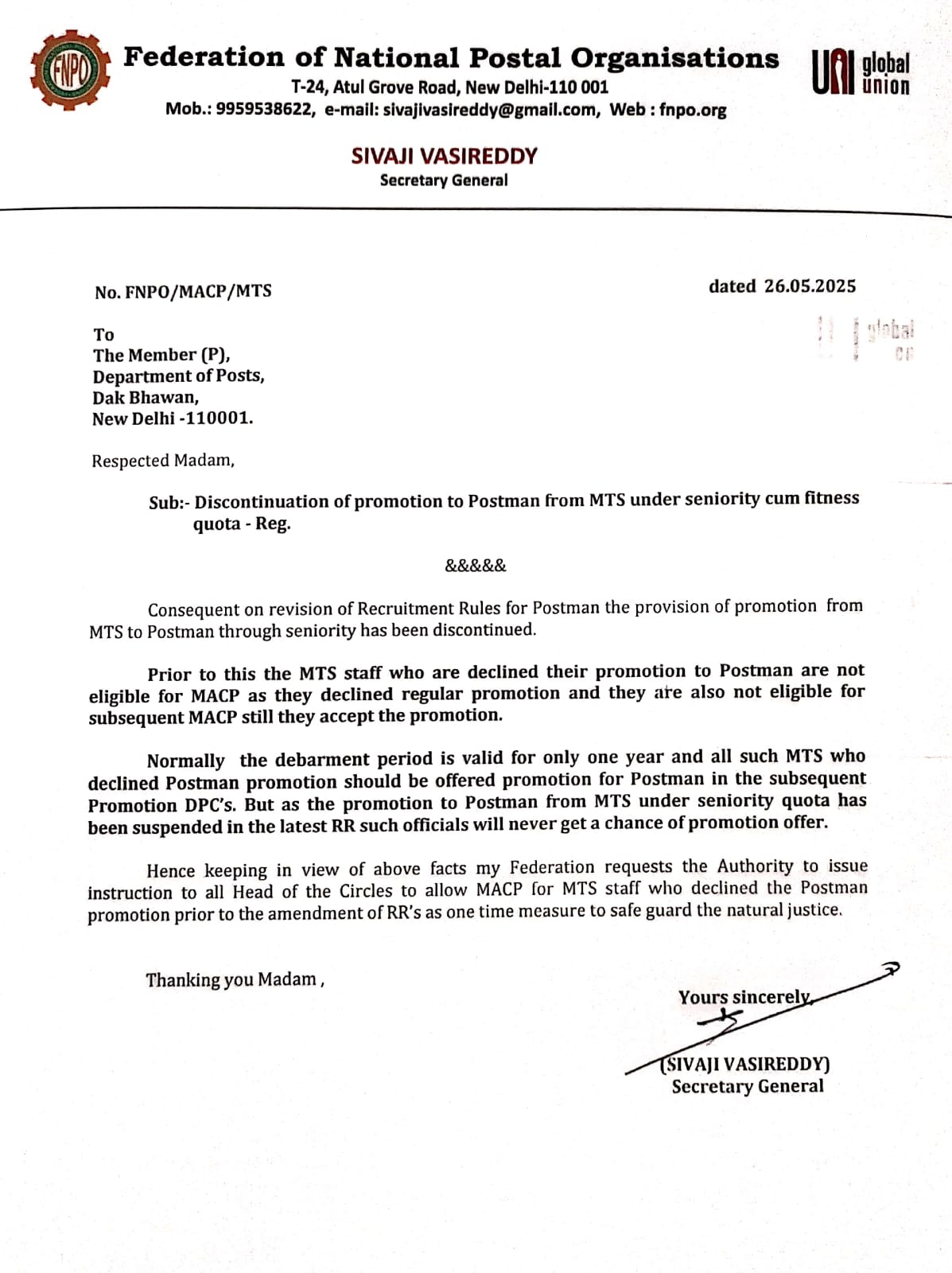
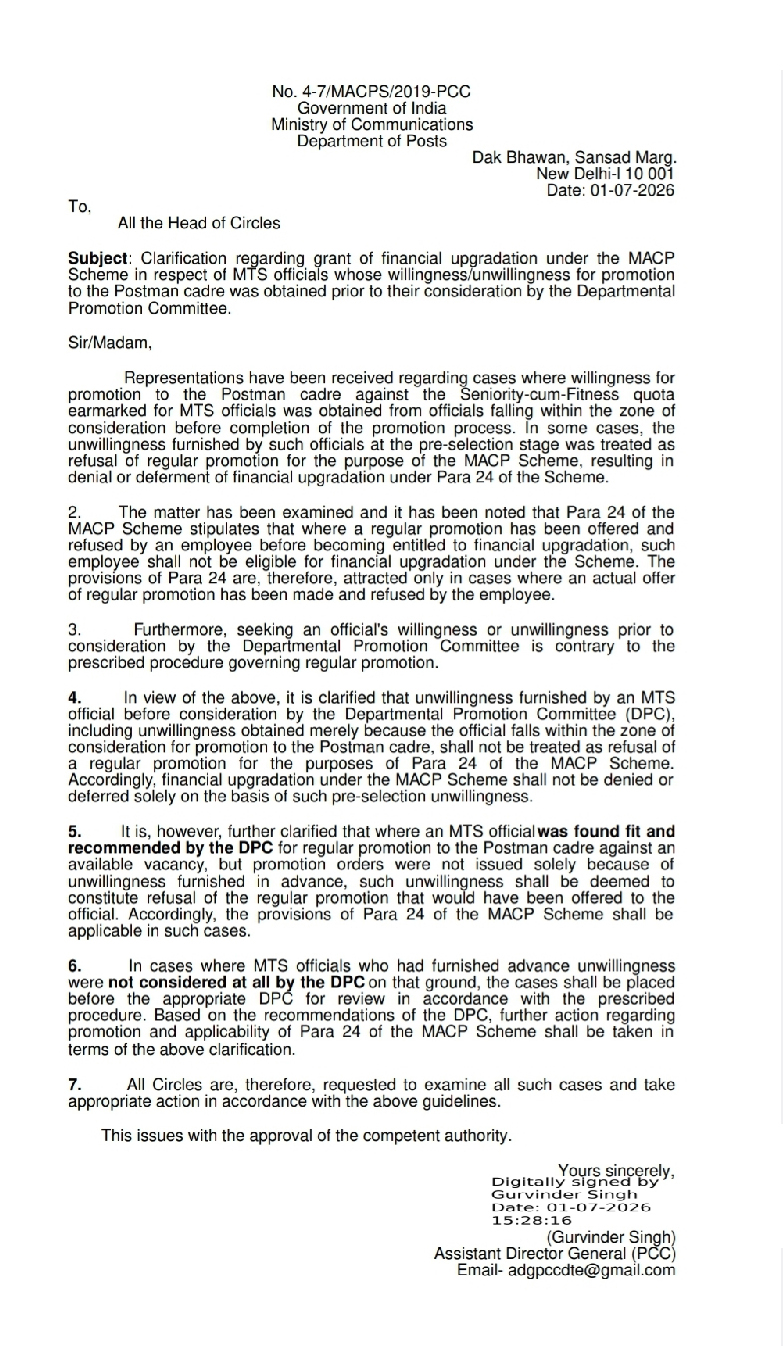
7. MACP anomalies should be resolved especially para 24 issue case of declaration to regular promotion.
8. Vadodara-Surat and Punjab CO-Jalandhar issue also discussed and requested to consider staff grivences.
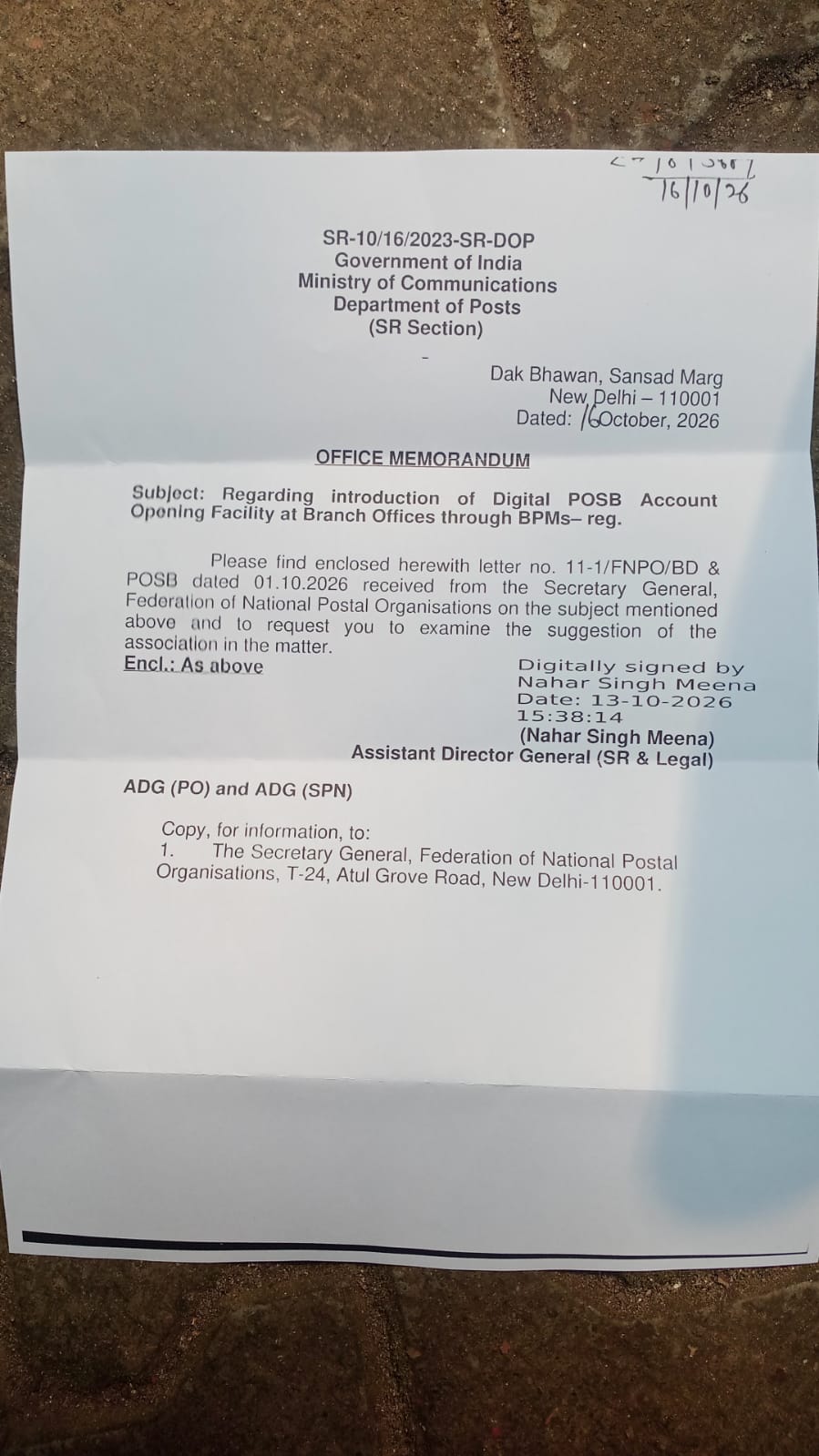
9. Digital POSB AC opening should be implemented at BO level.
10. In rule 38 while applying it is to be observed that..one qualifying service should be completed at the time of date of applying in portal. Due to this some cases were rejected even they completed one year by 31.8.26 11. Accounts should be continued and higher pay should be given.
12. Norms in the Estt portal are not correct and realtime. Explain Hyderabad GPO case with details and demanded to revive the norms for calculating actual workload.
13. MMS technical cadres should be continued keeping in view of its importance.
14. Strong objection raised about Kerala circle and other circles admin office reorganization issues
SG FNPO letter about MMS cadre related issues.
SG FNPO letter about RMS divisions merger, reorganization related issues.
SG FNPO letter about Kerala Circle admin ofcs reorganization related issues.
SG FNPO letter about Vadodara-Surat and Punjab Jalandhar RO admin ofcs reorganization related issues.
Digitally opening of POSB accounts by BO
SG FNPO letter about Estt review defective norms and irregular down gradation of Hyderabad GPO related issues.
SG FNPO letter about continuation of Accounts line as separate cadre
SG FNPO letter about MACP on refusal of regular promotion.
Click here to see the Hindi Version of this website .
“Forward ever, backward never: onwards with Breaking Through”


Affiliated union websites:
National Association of Postal Employees Group 'C
Sivaji Vasireddy
Secretary General, FNPO
sivajivasireddy@gmail.com
9959538622
30/09/2026
29/09/2026
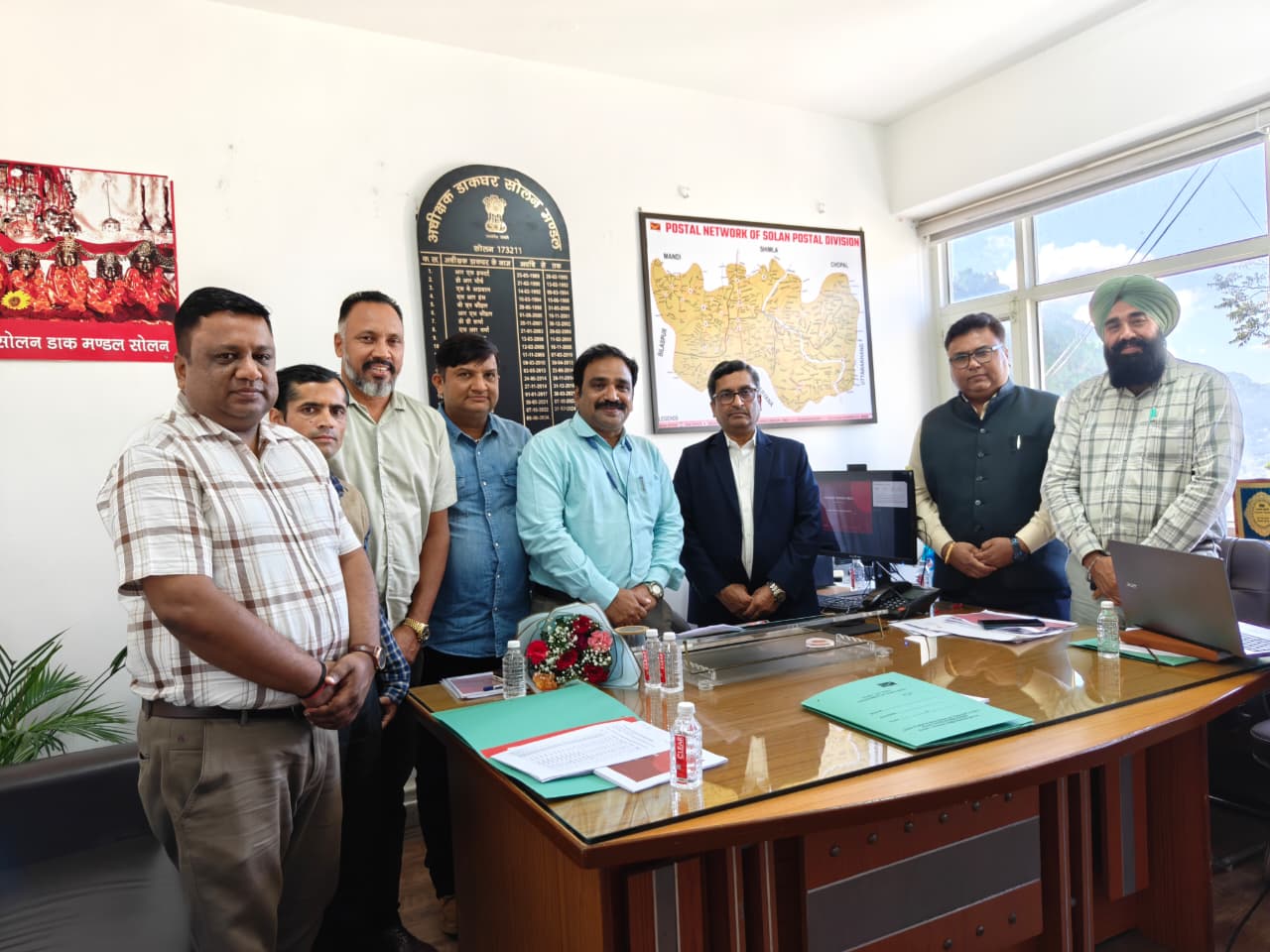
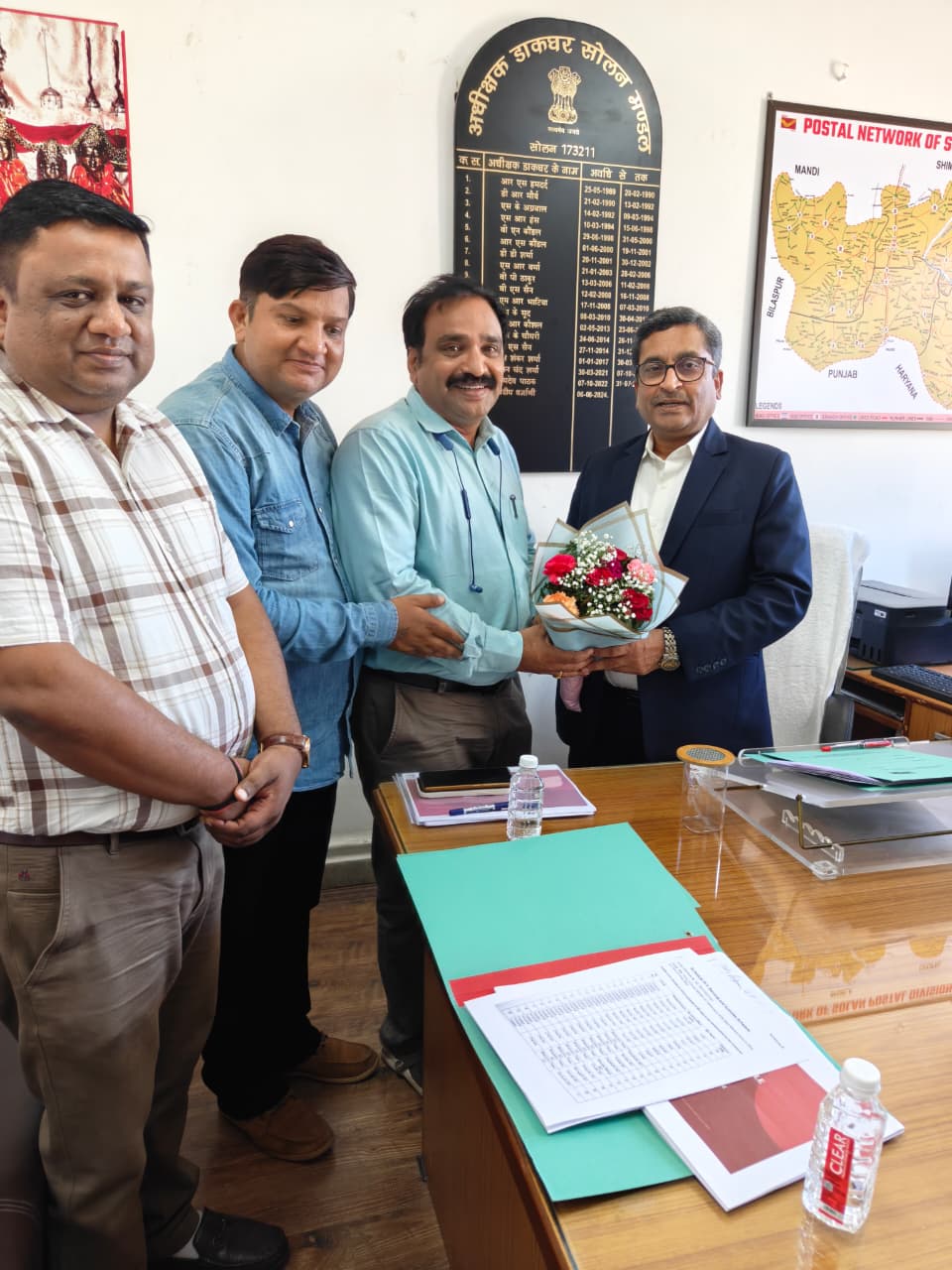
 On 29.9.2026 Sivaji Vasireddy, SG FNPO Sandeep Gulia FS FNPO & Vice Chairman Ambala Bank, Trilok Dy CS NAPEc Himachal Pradesh circle, Saurabh Mittal AGS NAPEc, Baljinder singh CS NAPEc Punjab, Dharampal Singh Director Ambala Bank and others met Sri Sanjay Singh chowhan, CPMG Himachal Pradesh, DPS HQRs at Solan DO and discussed various staff related issues with positive results. FNPO also conducted Membership verification campaigning in HP Circle.
 Sivaji Vasireddy SG FNPO
28/09/2026
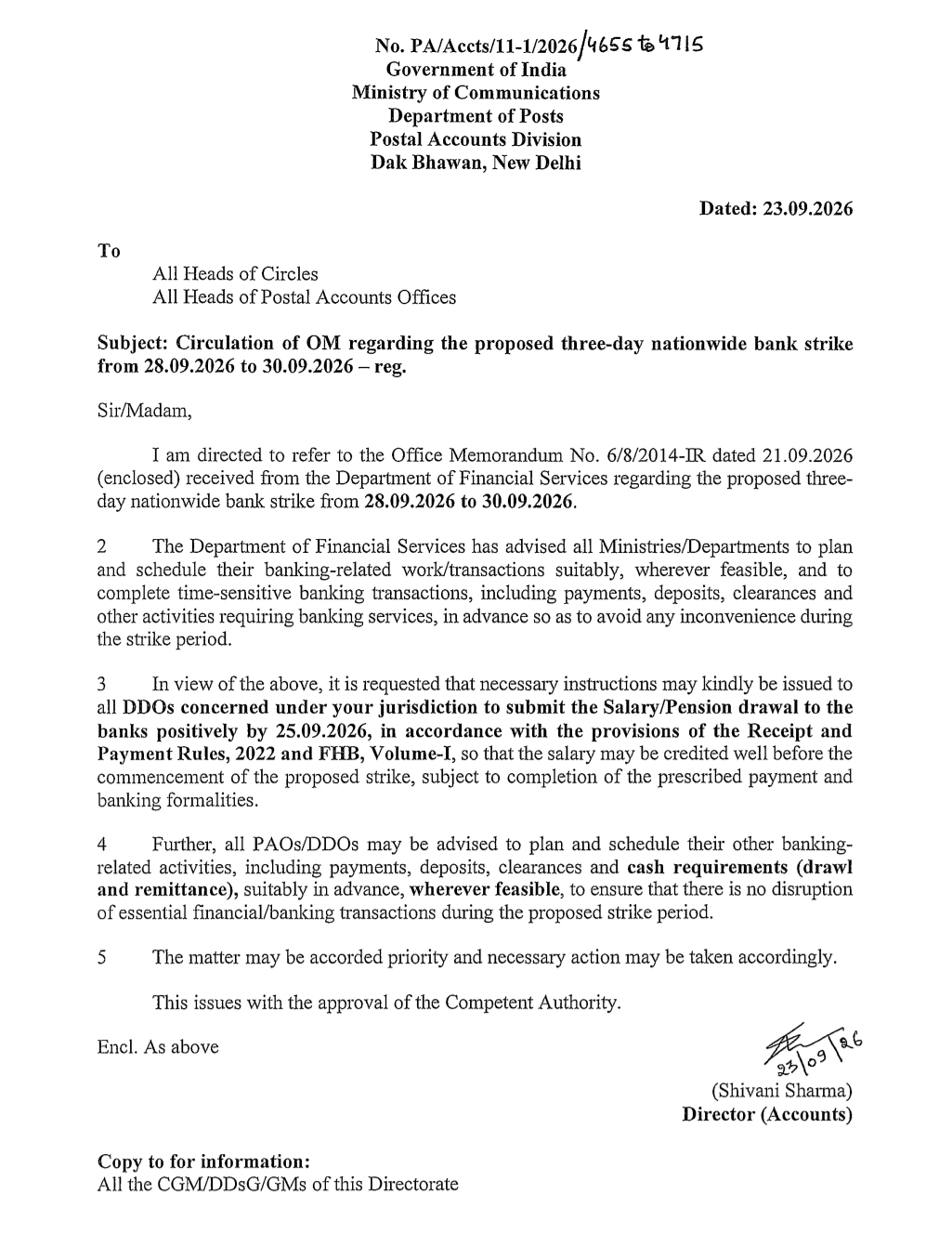
Identified categories of disability for the posts of PS Group ‘B’, ASP and LSG/HSG-II/HSG-I
25/09/2026
 SG FNPO & GS NAPEc tour Schedule for Sept to October 1st fortnight
26.9 Vizayanagaram/Srikulam. Ap
SG FNPO & GS NAPEc tour Schedule for Sept to October 1st fortnight
26.9 Vizayanagaram/Srikulam. Ap27.9 Bobbili, AP
28.9 Chandigarh Punjab
29.9 Shimla, HP
30.9 Ambala, Haryana
1.10 Delhi
2.10 Lucknow
3.10 Hometown
4.10 Sangareddy, Telangana
5.10 Patna, Bihar
6 - 9.10.26 UNI seminar Bangalore
10.10 JPGU FNPO seminar with all FNPO affiliated CS Bangalore, Karnataka
I request all FNPO CS please note the schedule and arrange meeting with all FNPO unions Divisional Secretaries on the mentioned dates to discuss about Membership 2026/Latest developments in India Post.
All FNPO affiliated GS please note the dates and join on tour and motivate all level leadership.
With regards,
Sivaji Vasireddy
SG FNPO
GS NAPEc
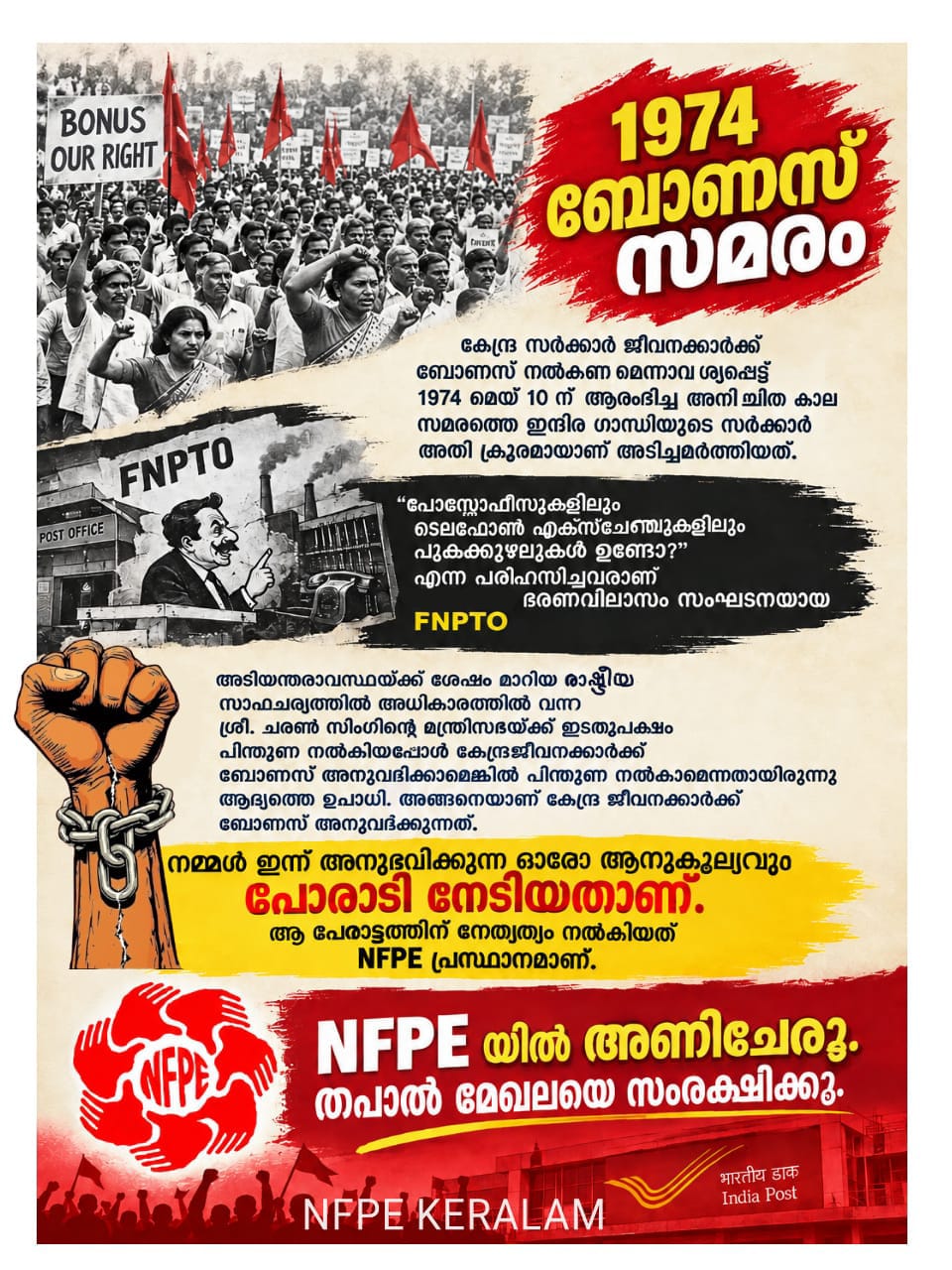 1974 BONUS STRUGGLE — LET THE ROLE OF FNPTO ALSO BE REMEMBERED
A poster is being circulated stating that the 1974 indefinite strike was solely the struggle of one organisation and that the leadership for every subsequent benefit was provided by that organisation.
But history cannot be written selectively.
In particular, the role of FNPTO in the 1974 struggle, including the bonus issue, cannot simply be described as “pro-administration” and forgotten. WHAT DID FNPTO DO IN 1974?
The Railway strike began on 8 May 1974, while the Central Government employees' strike was scheduled from 10 May 1974.
At this crucial juncture, K. Ramamurthi, the FNPTO leader, supported the Railway employees' struggle, including the issues that formed part of the wider 1974 demands.
The historical material of the FNPTO/FNPO movement records that he organised:
• Black-badge demonstrations
• Lunch-hour demonstrations and meetings
• Support for the Railway employees' struggle
This was not merely a statement issued from an office.
The Government subsequently suspended/withdrew recognition of FNPTO.
The organisation which is now being described as “pro-administration” therefore faced Government action for its stand in support of the employees' struggle. That fact cannot simply be deleted from the history of 1974.
FNPTO AND THE BONUS ISSUE
The bonus demand was one of the important issues in the wider 1974 struggle.
Therefore, when the history of the 1974 Bonus Struggle is discussed, the contribution and stand of FNPTO should also be placed on record.
It is not historically fair to present the bonus struggle as though only one federation stood for the employees and every subsequent benefit was achieved exclusively through its leadership.
Different organisations took different positions and participated at different stages. The contribution of each organisation should be judged from the historical record.
If someone attributes the statement “Are there chimneys in Post Offices and Telephone Exchanges?” to FNPTO, let the original documentary record be produced.
Even if such a statement is produced, one statement cannot be used to rewrite the entire historical record of FNPTO, particularly its documented actions during the 1974 struggle.
MY QUESTION IS VERY SIMPLE
If FNPTO was really nothing more than a “pro-administration” organisation, as it is now being portrayed:
Why did the Government take action against FNPTO when K. Ramamurthi supported the Railway employees' struggle?
Why were black-badge demonstrations and lunch-hour demonstrations organised? Why did FNPTO face suspension/withdrawal of recognition?
These are questions of historical record, not political opinion.
The FNPTO/FNPO historical material itself records the demonstrations and the subsequent Government action.
I AM NOT CLAIMING EXCLUSIVE CREDIT FOR FNPTO
I am not saying that FNPTO alone conducted the 1974 struggle.
I am saying exactly the opposite.
No federation should claim exclusive ownership of the history of a collective employees' struggle.
NFPE can record its contribution.
FNPTO has the right to record its contribution.
Railway organisations have the right to record their contribution.
But one organisation's history should not be written by deleting the role of another organisation.
For me, the issue is not who gets the credit.
The issue is whether we are prepared to tell the whole truth about the 1974 Bonus Struggle.
Let us debate history with documents.
Let us acknowledge every organisation that stood with employees.
But let us not label FNPTO “pro-administration” and then conveniently erase FNPTO's contribution and stand during the 1974 struggle, including the bonus issue.
History should not be selective.
With regards,
D. Theagarajan
Guidelines for Dis engagement of GDS
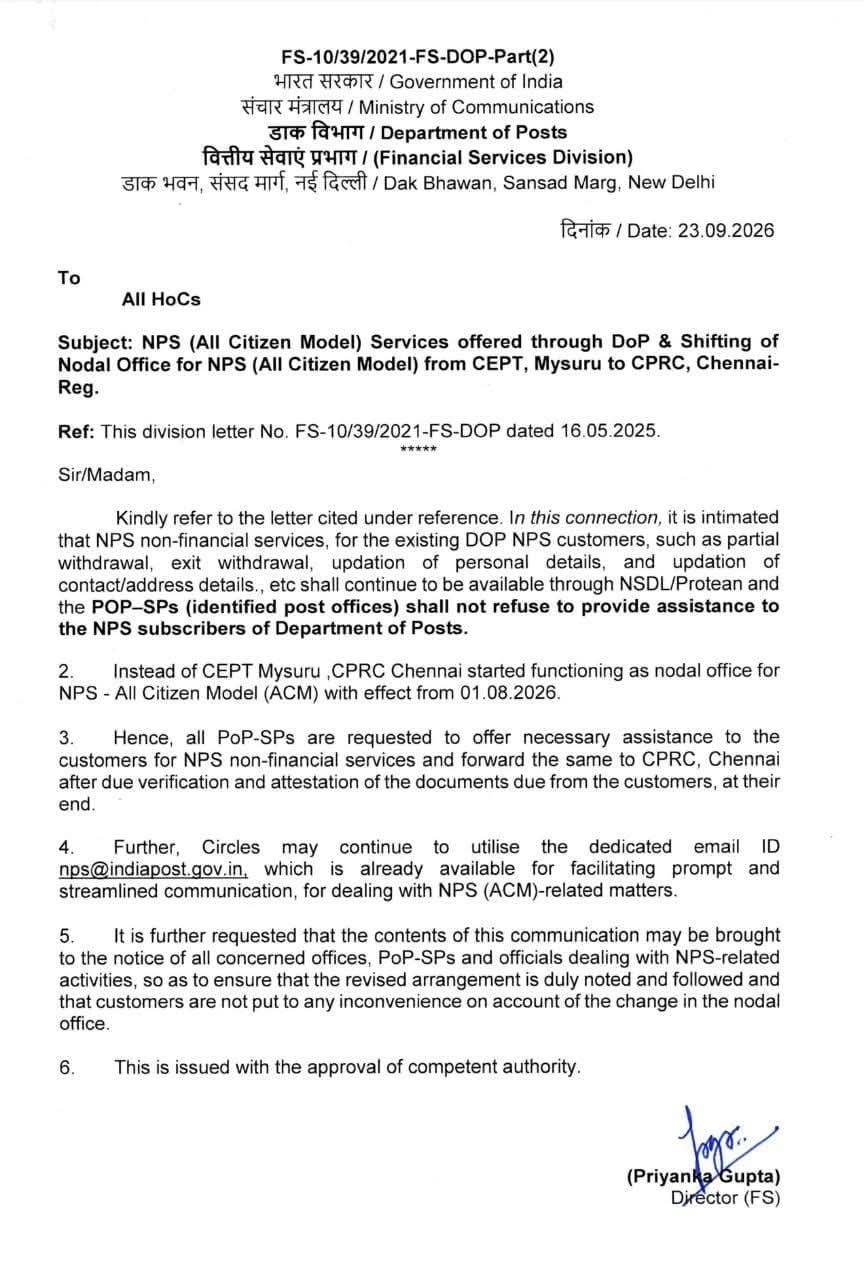
24/09/2026
Increase in ATM cash Loading Limits to ensure adequate cash in ATMs

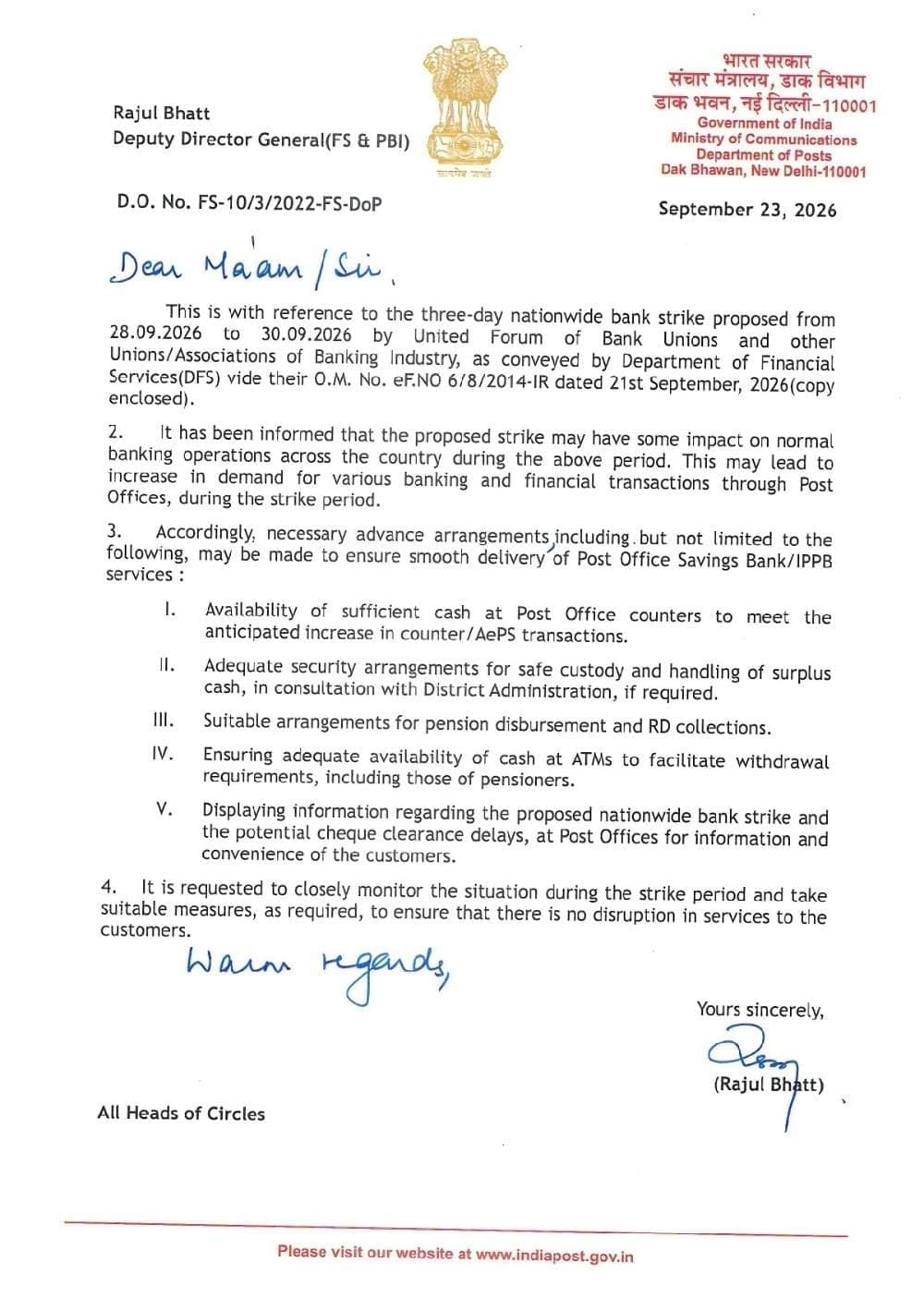
SG FNPO Letter Secretary Post about Bonus 25-2026 early payment and revision of limit to 21000 from 7000
SG FNPO Letter Secretary Post about Incentive system to the Enumerators case PMEGP scheme
SG FNPO Letter Secretary Post about In Complaints handling system in CCC APT2.O Portal
🚩Friends, today let's talk about the NPS, whose shortcomings the AIPEU and National Unions loudly citeThe NPS came into effect on January 1, 2004. But today, I have a direct question for the NFPE and FNPO, who are the ones voicing the most criticism of the NPS's shortcomings:
From 2004 to 2014, when a government aligned with your ideology was in power, why didn't you use your political influence and organizational influence to abolish the NPS or implement major reforms for the benefit of employees?
Were you then preoccupied with collecting employee donations, but not concerned about their pensions?
The responsibility lies not only with the government, but also with the employee organizations that played an influential role for years but failed to achieve decisive results against the NPS.
On the contrary, thanks to the efforts of the BPEF, significant provisions for Retirement Gratuity and Death Gratuity were implemented for NPS employees on August 26, 2016.
Following this, the process of employee-friendly reforms in the NPS progressed, and today, the matter has reached the UPS.
And yes—BMS is still fighting for the reinstatement of OPS.
So, the question to NFPE and FNPO is:
Where was your power during the ten years from 2004 to 2014?
Where was your influence on NPS reforms and OPS?
And why political propaganda among employees in the name of the same NPS today?
🚩 Employees don't want speeches, they want an account of past years!
Jai BMS 🚩
Vande Mataram Dear Friends,
This msg is compelled to forward to bringing facts and to counter false propaganda by BPEF through msg about NPS.
Let us discuss the history of NPS and OPS on the basis of documentary records, rather than selectively recalling history.
It is a fact that the National Pension System for new Central Government employees came into effect from 1 January 2004 during the NDA Government headed by Shri Atal Bihari Vajpayee. The legislative process relating to PFRDA continued subsequently under the UPA Government, and the PFRDA Act was eventually enacted in 2013.
Therefore, the history of NPS cannot be attributed exclusively to one political party or one Government.
The more important question is: What did the employee organisations do during this period?
I was the Secretary General of FNPO from July 2004 to March 2018. During this entire period, whenever any decision or action of the Government or the Department went against the interests of employees, FNPO firmly opposed it and responded appropriately, without compromising with the Government or with any Departmental officer, whoever he or she might be.
The documentary record clearly establishes that FNPO did not remain silent on NPS or PFRDA.
Please refer to the September 2011 issue of FNPO's Federal Sentinel. It carried a specific programme against the proposed PFRDA Bill and directed Circle Secretaries of affiliated unions to organise marches to Raj Bhavans and submit memoranda to the Prime Minister through the Governors.
The memorandum submitted by FNPO and its affiliated unions to the then Prime Minister, Dr. Manmohan Singh, clearly expressed strong opposition to the PFRDA Bill.
The memorandum objected to:
• replacing the Defined Benefit pension system with a Defined Contribution system;
• exposing pension funds to investment and market-related risks;
• weakening the social-security protection of Government employees;
• transferring the burden of retirement security away from the Government; and
• putting the future pension security of employees and their families at risk.
Most importantly, FNPO unequivocally demanded withdrawal of the PFRDA Bill from Parliament and supported continuation of the existing “Pay as you go” pension system.
Therefore, it is not historically correct to say that FNPO had no concern about NPS during the period from 2004 to 2014.
FNPO subsequently carried this position forward through the National Council JCM Staff Side. Its submissions before the Seventh Central Pay Commission included the demand that NPS should be scrapped and that the Old Pension Scheme should apply to employees irrespective of their date of appointment. The demand continued to remain part of the employees' agenda in subsequent discussions and campaigns.
This does not mean that FNPO claims to have already achieved restoration of OPS. The fact is that successive Governments continued the NPS framework, and the demand for restoration of OPS remains an issue for employees.
That distinction is important.
Regarding the 26 August 2016 gratuity order The benefit of Retirement Gratuity and Death Gratuity to NPS-covered Central Government employees is certainly an important development.
However, when the question of who secured the benefit is raised, we should examine the complete official record.
The Government's own records indicate that benefits relating to Death/Retirement Gratuity had already been provisionally extended in certain cases involving death or disability during service through the 5 May 2009 order, while the 26 August 2016 order extended gratuity benefits to all NPS-covered Central Government employees.
Therefore, the 2016 order should certainly be acknowledged as a significant employee-friendly measure. But the order by itself does not establish that one particular organisation alone secured the entire reform.
If any organisation claims exclusive credit, the appropriate question is simple:
Where are the representations, memoranda, negotiations and official records establishing that exclusive claim?
We should give credit where documentary evidence supports it, but we should not rewrite history by giving exclusive credit without documentary evidence.
What employees really need
Employees are entitled to ask:
What did each organisation demand?
What representations did it submit?
What protests and campaigns did it conduct?
What did it achieve?
And what remains unachieved?
These questions should be applied equally to NFPE, FNPO, BMS and every other organisation.
FNPO does not claim that opposing NPS was the same as defeating NPS. It did not happen. The NPS continued, the PFRDA legislation became law, and the demand for a secure and assured pension has continued.
But equally, it is incorrect to suggest today that FNPO was silent between 2004 and 2014.
The September 2011 Federal Sentinel is a contemporary documentary record. It shows that FNPO formally opposed the PFRDA Bill, organised action through its affiliated unions and demanded protection of the existing pension system.
Therefore, before asking,
“Where was FNPO during those ten years?”
please first examine the documentary record of what FNPO actually did during those years.
And let the same standard be applied to every organisation.
Employees do not need selective history. They deserve the complete history.
Let us debate the dated documentary record honestly, acknowledge what was achieved, acknowledge what was not achieved, and continue the struggle for secure retirement benefits without unnecessarily converting the pension issue into political propaganda.
Further FNPO opposed UPS also and demanded OPS by scrapping NPS/UPS. On 10.8.23 NCJCM held rally at Ramleela maidan and FNPO also played its key role in its success.
With false allegations and fake news HISTORY can't change..
Let's join FNPO ..Vote for FNPO
With regards,
Sivaji Vasireddy
Secretary General FNPO Dear Brother Sivaji and Friends,
Let us discuss the history of NPS and OPS on the basis of documentary records, rather than selectively recalling history.
It is a fact that the National Pension System for new Central Government employees came into effect from 1 January 2004 during the NDA Government headed by Shri Atal Bihari Vajpayee. The legislative process relating to PFRDA continued subsequently under the UPA Government, and the PFRDA Act was eventually enacted in 2013.
Therefore, the history of NPS cannot be attributed exclusively to one political party or one Government.
The more important question is: What did the employee organisations do during this period?
I was the Secretary General of FNPO from July 2004 to March 2018. During this entire period, whenever any decision or action of the Government or the Department went against the interests of employees, FNPO firmly opposed it and responded appropriately, without compromising with the Government or with any Departmental officer, whoever he or she might be.
The documentary record clearly establishes that FNPO did not remain silent on NPS or PFRDA.
Please refer to the September 2011 issue of FNPO's Federal Sentinel. It carried a specific programme against the proposed PFRDA Bill and directed Circle Secretaries of affiliated unions to organise marches to Raj Bhavans and submit memoranda to the Prime Minister through the Governors.
The memorandum submitted by FNPO and its affiliated unions to the then Prime Minister, Dr. Manmohan Singh, clearly expressed strong opposition to the PFRDA Bill.
The memorandum objected to:
• replacing the Defined Benefit pension system with a Defined Contribution system;
• exposing pension funds to investment and market-related risks;
• weakening the social-security protection of Government employees;
• transferring the burden of retirement security away from the Government; and
• putting the future pension security of employees and their families at risk.
Most importantly, FNPO unequivocally demanded withdrawal of the PFRDA Bill from Parliament and supported continuation of the existing “Pay as you go” pension system.
Therefore, it is not historically correct to say that FNPO had no concern about NPS during the period from 2004 to 2014.
FNPO subsequently carried this position forward through the National Council JCM Staff Side. Its submissions before the Seventh Central Pay Commission included the demand that NPS should be scrapped and that the Old Pension Scheme should apply to employees irrespective of their date of appointment. The demand continued to remain part of the employees' agenda in subsequent discussions and campaigns.
This does not mean that FNPO claims to have already achieved restoration of OPS. The fact is that successive Governments continued the NPS framework, and the demand for restoration of OPS remains an issue for employees.
That distinction is important.
Regarding the 26 August 2016 gratuity order The benefit of Retirement Gratuity and Death Gratuity to NPS-covered Central Government employees is certainly an important development.
However, when the question of who secured the benefit is raised, we should examine the complete official record.
The Government's own records indicate that benefits relating to Death/Retirement Gratuity had already been provisionally extended in certain cases involving death or disability during service through the 5 May 2009 order, while the 26 August 2016 order extended gratuity benefits to all NPS-covered Central Government employees.
Therefore, the 2016 order should certainly be acknowledged as a significant employee-friendly measure. But the order by itself does not establish that one particular organisation alone secured the entire reform.
If any organisation claims exclusive credit, the appropriate question is simple:
Where are the representations, memoranda, negotiations and official records establishing that exclusive claim?
We should give credit where documentary evidence supports it, but we should not rewrite history by giving exclusive credit without documentary evidence.
What employees really need
Employees are entitled to ask:
What did each organisation demand?
What representations did it submit?
What protests and campaigns did it conduct?
What did it achieve?
And what remains unachieved?
These questions should be applied equally to NFPE, FNPO, BMS and every other organisation.
FNPO does not claim that opposing NPS was the same as defeating NPS. It did not happen. The NPS continued, the PFRDA legislation became law, and the demand for a secure and assured pension has continued.
But equally, it is incorrect to suggest today that FNPO was silent between 2004 and 2014.
The September 2011 Federal Sentinel is a contemporary documentary record. It shows that FNPO formally opposed the PFRDA Bill, organised action through its affiliated unions and demanded protection of the existing pension system.
Therefore, before asking,
“Where was FNPO during those ten years?”
please first examine the documentary record of what FNPO actually did during those years.
And let the same standard be applied to every organisation.
Employees do not need selective history. They deserve the complete history.
Let us debate the dated documentary record honestly, acknowledge what was achieved, acknowledge what was not achieved, and continue the struggle for secure retirement benefits without unnecessarily converting the pension issue into political propaganda.
With regards,
D. Theagarajan
Ex.. SG FNPO
Implementation of Biometric/OTP-based Geo-tagged Attendance System for Gramin Dak Sevaks (GDS) and Departmental Employees through Dak Saathi App
Rationalization of Parcel Hub Network under MPOP
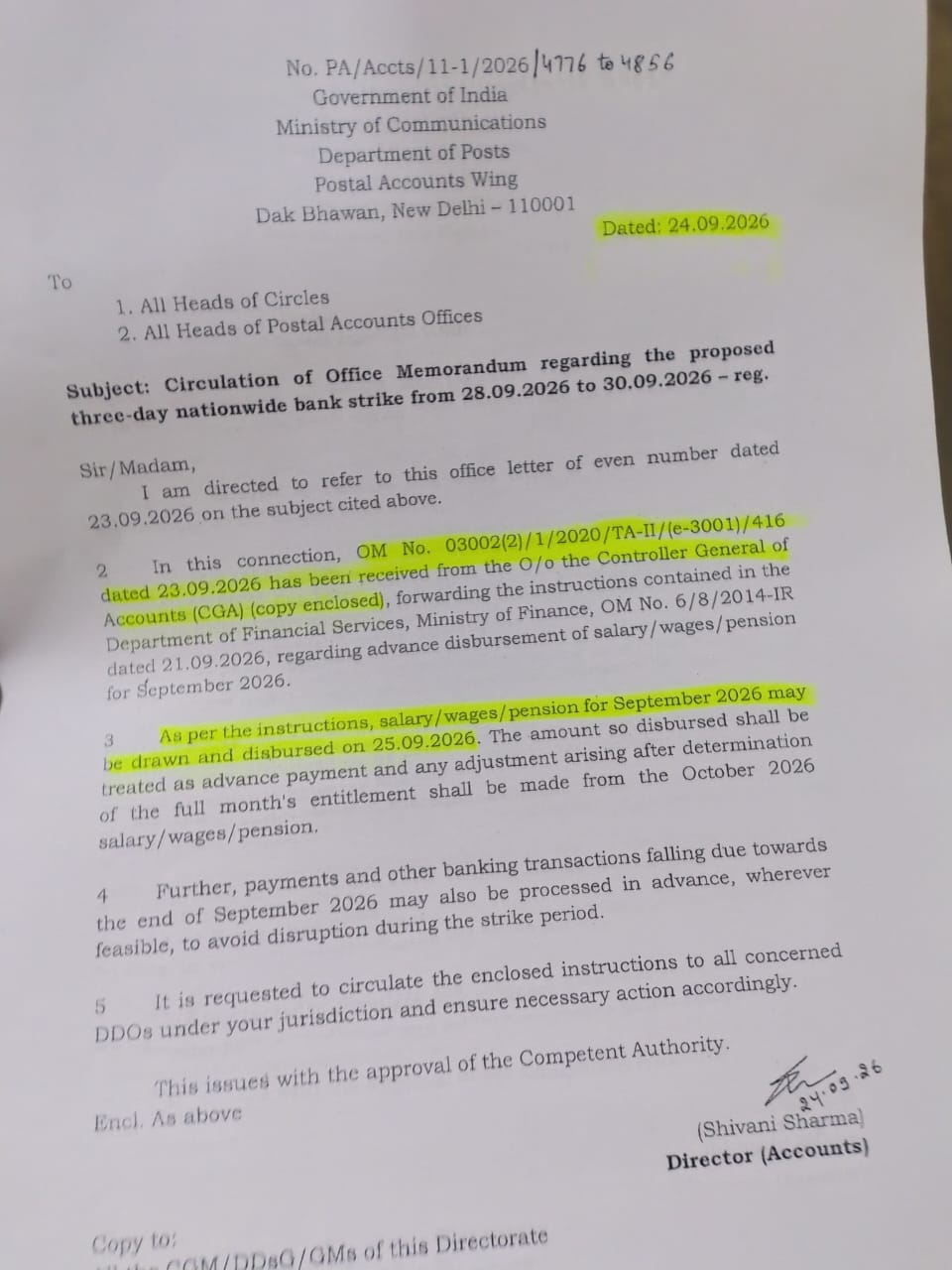
23/09/2026
@All , PLEASE NOTE:1. Circles are requested to consolidate and send the details of offices that are shown as pending but have actually been merged/mapped to another unit, through email, before 21-09-2026 , so that the same can be excluded from the vacancy data entry pendency sheet. Refer format attached.
2. If anyone wants to withdraw their transfer request, please do so now, so that others can get a chance.
3. Circles may cancel void requests, such as those related to promoted, resigned, or retired employees , using the Rule38 Cancel Void Transfer Requests card with the role Unfreeze Circle Departmental .
4. If any changes are required to the Home Division due to the bifurcation or reorganization of divisions, the same may please be informed immediately through the proper channel, with approval from the Directorate, on or before 21-09-2026. Please verify the Parent Division before applying, as an incorrect Parent Division will cause issues during the relieving of the employee. The employee has to be relieved from the Parent Division only as per the transfer request . Changes to the Parent Division will not be allowed in the future.
 Dear All, Please Note: There is no case pending with CEPT on the above scenarios. All the emails/letters received through directorate are addressed and responded appropriately. We will start the processing of the Rule-38 transfer requests today as per the schedule. No changes will be allowed during result processing.
20/07/2026
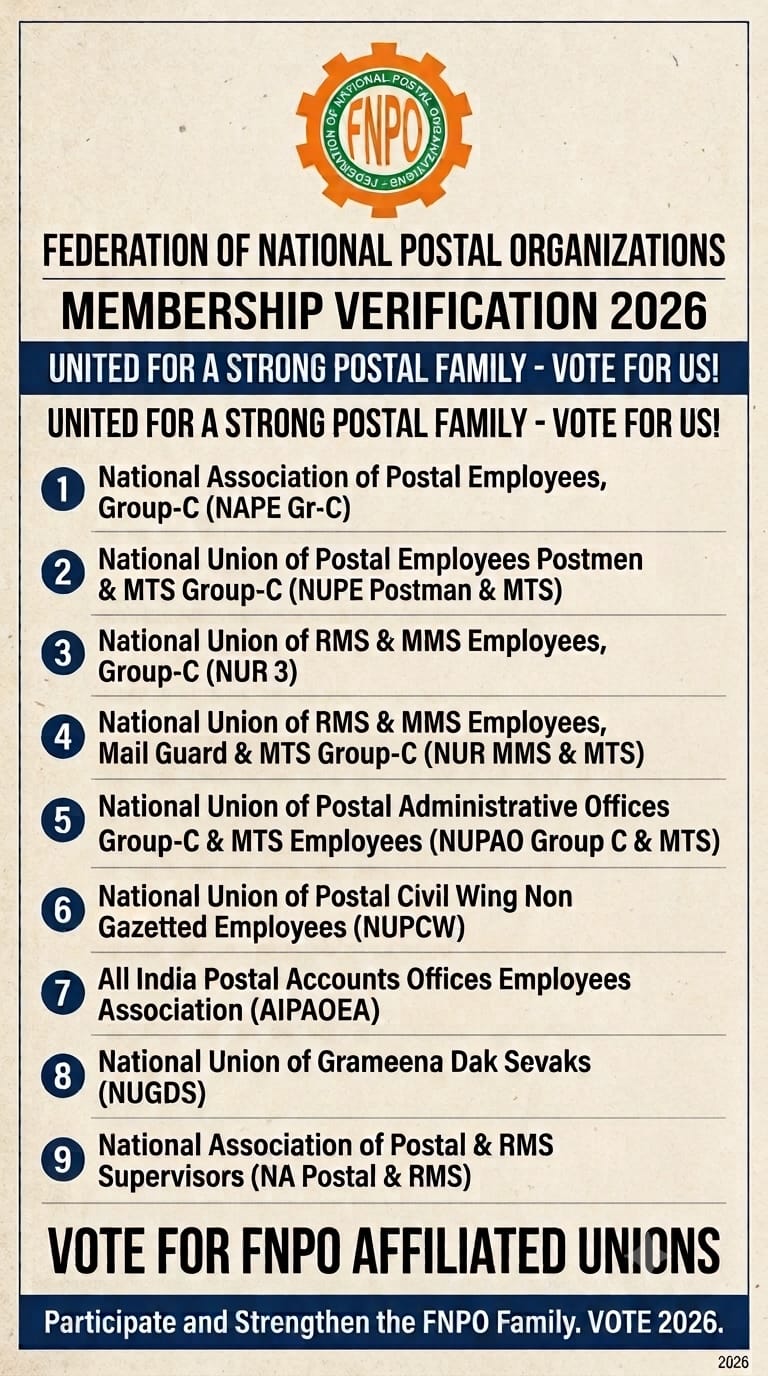
National Association of Postal Employees, Group-CNational Union of Postal Employees Postmen & MTS Group-C
National Union of RMS & MMS Employees , Group-C
National Union of RMS & MMS Employees, Mail Gaurd & MTS Group-C
National Union of Postal Administrative Offices Group-C & MTS Employees
National Union of Postal Civil Wing Non Gazetted Employees
All India Postal Accounts offices Employees Association
National Union of Grameena Dak Sevaks
National Association of Postal & RMS Supervisors
FNPO affiliated unions participating in Members Verification 2026
Business hours to conduct Aadhaar enrolment and update transactions
Formation of National Association of Postal & RMS Supervisors — Approval of Office Bearers and Extension Of Trade Union Facilities
National Association of Postal & RMS Supervisors association.... CHQ office bearers... After membership verification, the first AIC will be held in grand manner .. So let's mobilise all HSG II HSG I and NFG officials to enrol as members of NAPRS in the upcoming membership verification/votingSivaji Vasireddy
19/07/2026
19 SEPTEMBER 1968 HISTORY MUST BE REMEMBERED IN FULL, NOT SELECTIVELY STOP SELECTIVE HISTORY — LET THE WORKERS KNOW THE COMPLETE TRUTH WORKERS’ HISTORY IS NOT CPM PROPERTY.I have no objection to remembering the employees who lost their lives during the 19 September 1968 strike. Their sacrifices deserve respect. But trade-union history cannot be presented selectively to serve today's political agenda.
Every September, the same political group suddenly rediscovers 19 September 1968 and presents it as though it alone represents the entire history of the Central Government and P&T working-class movement.
Why this selective remembrance?
If Kerala and the role of EMS Namboodiripad are specifically highlighted, why is there complete silence about the political and trade-union developments in the then Madras State, where Thiru C. N. Annadurai was the Chief Minister in 1968? If state governments are being discussed as part of the history, the Tamil Nadu/Madras State experience also deserves an honest examination—not selective mention of only the state that suits a particular political narrative.
The historical record itself shows that the 19 September 1968 strike was a wider Central Government employees' struggle. The demands included need-based minimum wage, full neutralisation of price rise, merger of DA with pay and other service-related issues. The Central Government invoked the Essential Services Maintenance Ordinance and imposed severe penalties and victimisation. These facts are documented and should be discussed honestly.
But 19 September 1968 did not begin the history of the Central Government employees' movement.
What about the historic five-day strike of July 1960? That struggle preceded the 1968 strike and was itself a major chapter in the history of Central Government employees. Contemporary trade-union accounts describe the 1960 action as the first major post-Independence strike of Central Government employees.
What about the contribution of the P&T trade-union movement and its own leaders?
What about the internal divisions, factionalism and political interference that affected the P&T movement over the years?
These questions cannot simply be erased because they are inconvenient to a particular political narrative.
Those who want to teach today's pensioners and employees about trade-union history should first read the original records and the established histories of the P&T movement.
I would particularly request colleagues to read:
“Panorama of P&T Trade Union Movement” by N. J. Iyer, especially the relevant pages covering the period in question;
and
“Glimpses of a Unique Union” by D. Gnaniah, particularly the sections dealing with the relevant period.
Do not accept history merely because somebody repeats it every September.
Read the records. Examine the facts. Compare different accounts. Then form your own conclusion.
Trade-union history belongs to the workers who lived through those struggles. It should not become the property of any political party or ideological group.
There is another important question for today's pensioners:
Are we remembering the past because we genuinely want to preserve the history of workers' struggles—or are we using the history of 1968 to promote today's political programmes?
The poster itself moves from the events of 1968 directly into present-day political attacks on the Central Government and present-day pensioner programmes. That makes the political purpose of the message a legitimate subject for discussion.
Pensioners today have their own immediate problems—pension revision, medical facilities, CGHS, family pension, commutation, age-related benefits and the demands before the 8th CPC.
These issues should not be overshadowed by political slogans from 1968.
Let us respect all workers who sacrificed their lives.
Let us remember all chapters of our trade-union history.
Let us reject selective history, factional glorification and political appropriation of workers' sacrifices.
Do not teach us history selectively.
Give us the complete history.
Let the workers read it.
Let the workers decide what the history actually says.
Workers' history is not the property of CPM, CPI, Congress, BJP, DMK, AIADMK or any other political organisation.
It belongs to the workers.
With regards,
D. Theagarajan
18/09/2026
Big news! 🤩 The FNPO's demand for an online portal for transfers (RT & temporary) is in the works! 🥳 This will ensure uniformity and fairness, helping to avoid discrimination. So excited for this positive change! ✨ #FNPO #Online Portal
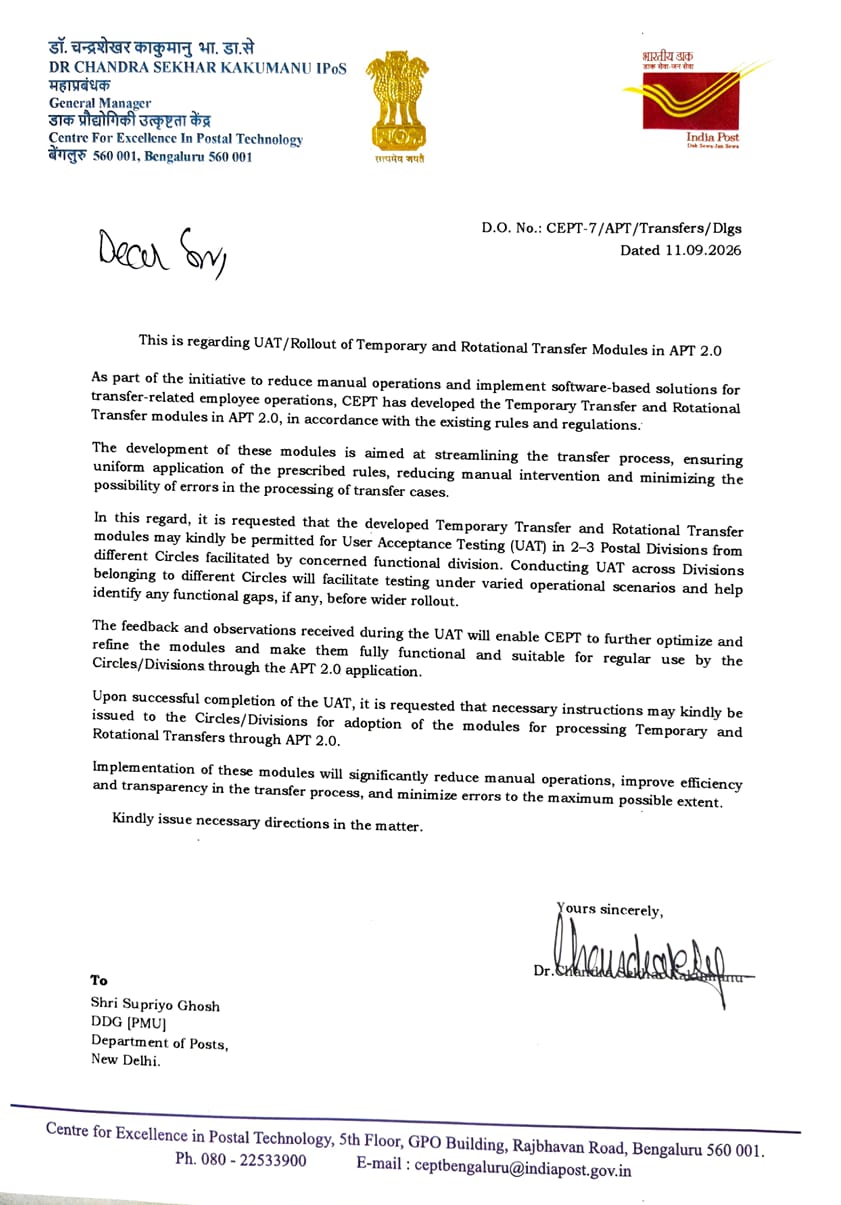 Rollout of Temporary and Rotational Transfer Modules in APT 2.0
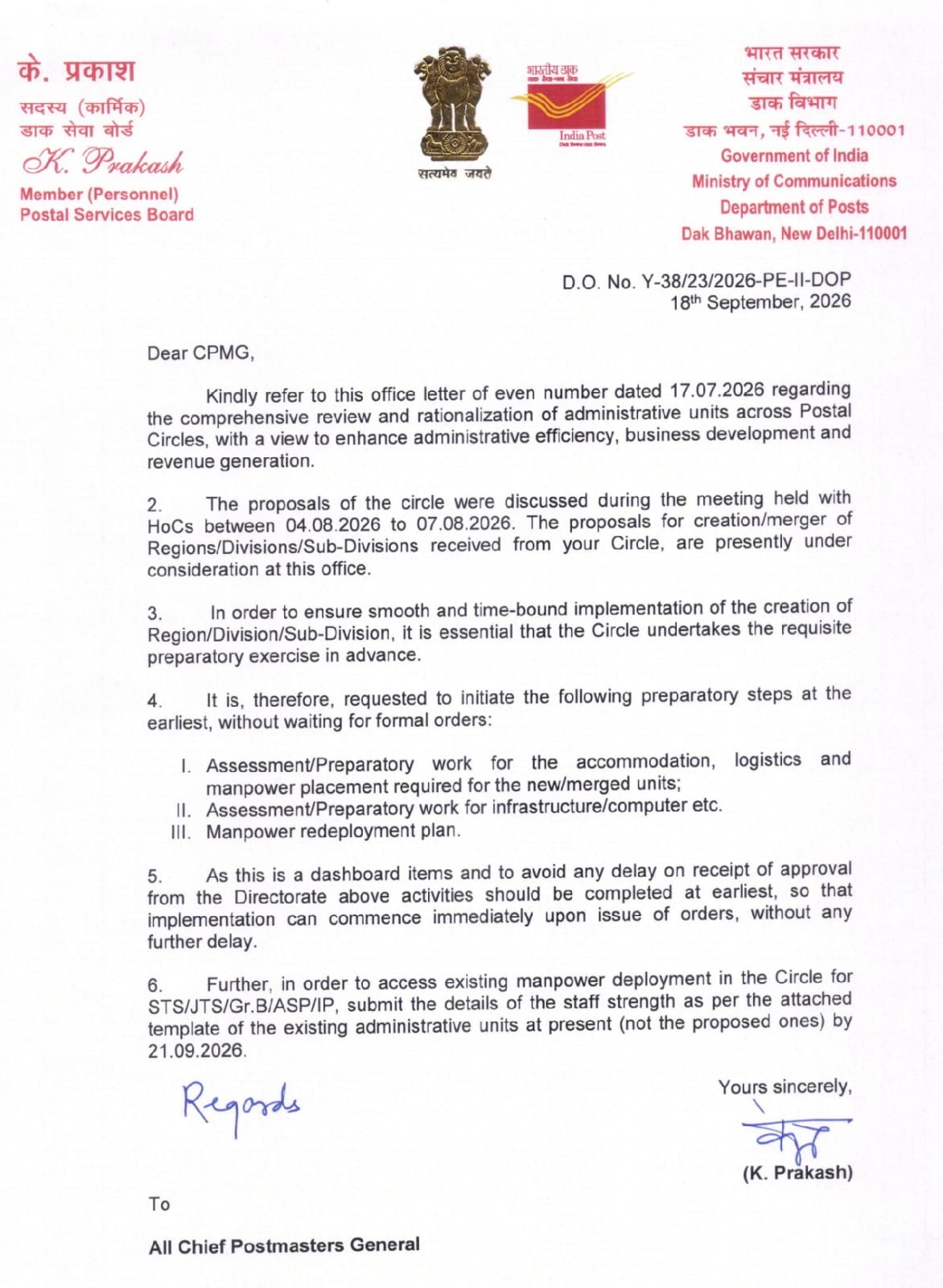
Eligibility of serving Central Government employees for availing CGHS facilities
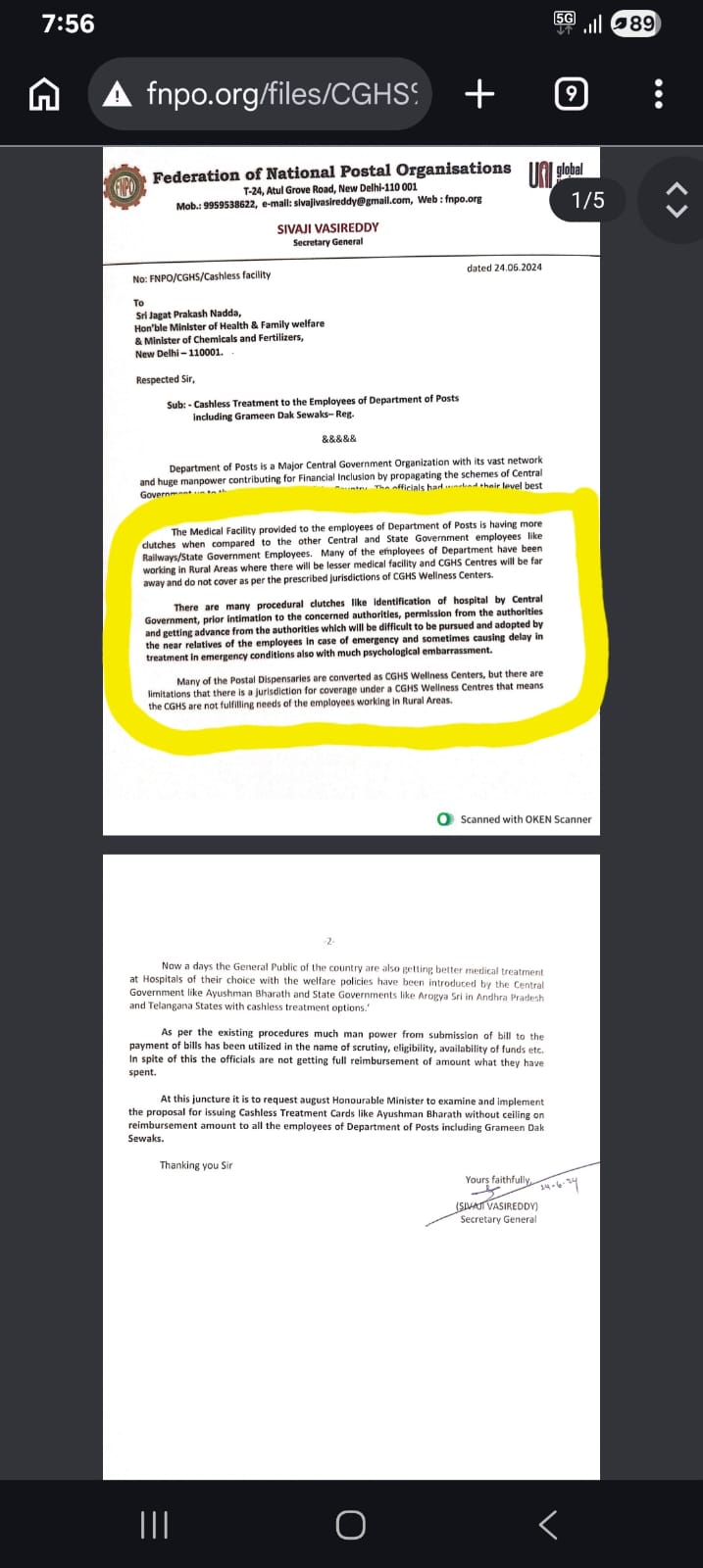 Issue raised by FNPO
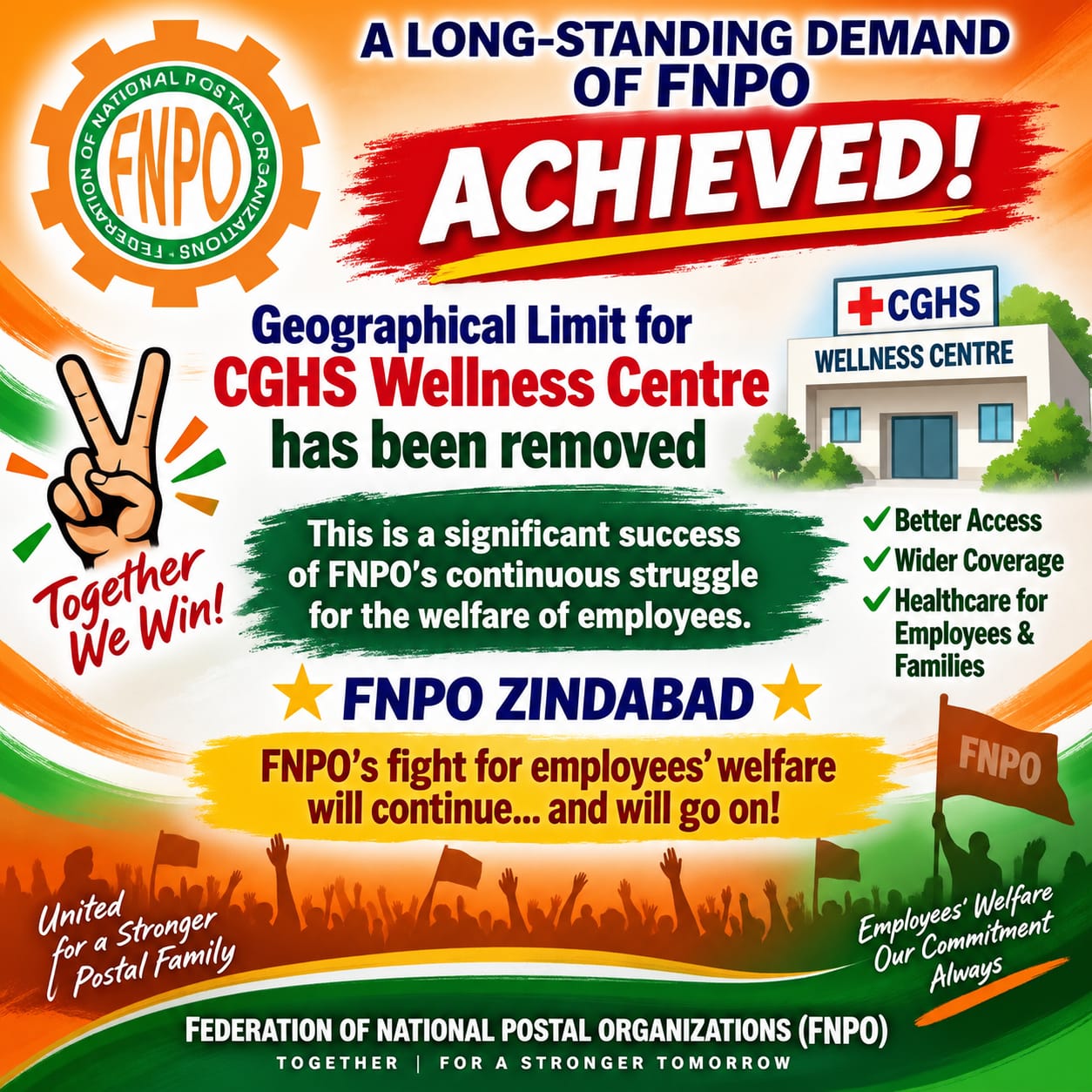 Success achieved
15/09/2026
Limited Transfer Facility (LTF) on request of Gramin Dak Sevaks (GDS) – Amendment in Para 2 regarding Order of Priority for Transgender GDS
Implementation of common organization structure in administrative units in line with Department's hierarchy of Horizontal and Vertical
14/09/2026
Recovery From Class-III Employees Impermissible: Bombay High Court Quashes ₹40 Lakh Recovery Notice Against Retired Pune University's Data Entry Operator
 🙏Happy Ganesh Chaturthi! To all 🙏
"May Lord Ganesha remove all obstacles and bless everyone with health, happiness, success & prosperity."
🌺 Ganpati Bappa Morya! 🌺
— Sivaji Vasireddy
Secretary General, FNPO
GS NAPEc
10/09/2026
SG FNPO and team during the period 8.9.26 to 10.9.26 met Member P, DDG P, SR & Estt, Director GDS, CPC, SPN and some other officers at Directorate, Delhi Circle DPS HQR , DPS Mails and also visited some DOs and POs in Delhi. Submitted letters and discussed various issues with positive results.1. Rule 38 September cycle service condition issue.
2. GDS increment recovery issue should be solved on par with Department employees.
3. POPSK staff 5 day week and deployment of Verification officer issues
4. Spl drives should be continued regularly for other circles also like Delhi where vacancies are more since long. This will help Delhi drive PM MTS Rule 38 condition from 5 to 2 years without any interruption for services.
5. GDS - CDA recovery should be stopped at all circles up to finalisation of Kerala High court case
6. Reminder about GOA RO excess staff and Division staff shortage issue.
7. Delhi circle NDC issues, Quarter allotment, DPCs matters and harrasment of Postmen staff in some DCs by Supervisiors discussed with DPS Delhi.
8. Non adding of resultant chain vacancies to LDCE
9. Allotment of sufficient funds to circles on par their RE BE request.
10. Regarding membership verification Delhi CAT stayed for Sl 1 and Sl 15 distinct categories waiting for order.
11. Targets pressure especially for digital transaction issues should be stopped.
12. Irrational merger of divisions, sub divisions and bifurcation of Circle issues should be discussed with stakeholder unions and their concerns should be considered.
Special Recruitment Drive in Postman/Mail Guard/MTS cadres - request for a uniform nationwide mechanism for filling unfilled vacancies through surplus qualified candidates of other Circles and relaxation of five-year Rule-38 transfer restriction for officials recruited under Special Recruitment Drive in Delhi Circle
Request for modification of qualifying service requirement for grant of annual increment to GDS
Recovery of Combined Duty Allowance from GDS officials on the basis of Audit objections - request to keep all recoveries in abeyance pending final decision of Hon'ble High Court of Kerala
Non-observance of five-day work week for staff working in POPSKs and deployment of Verification Officers at POPSKs
09/09/2026

UNI Asia & Pacific Post and Logistics sector conference commits to a stronger, unified sector
08/09/2026
Deputing a system manager as the nodal officer in all Divisions and appoint a circle level nodal officer for Membership Verification
Central Civil Services (Leave Travel Concession) Rules, 1988 - Relaxation to travel by air to visit North East Region, UT of Jammu & Kashmir, UT of Ladakh and Andaman & Nicobar Islands - extension for two years beyond 25.09.2026
Implementation of common organization structure in Administrative Units in line with Department's hierarchy of Horizontal and Vertical-Regarding
Revision of ceiling rate and guidelines for reimbursement of expenses on purchase of Standard Digital Programmable and Rechargeable Hearing Aid under CS(MA) Rules, 1944 and CGHS
SG FNPO letter about Rule 38 September cycle ... Portal bugs related to Service eligibility
08/09/2026
Discrepancies in September Cycle Of Rule-38 Transfers and request for extension Of last date
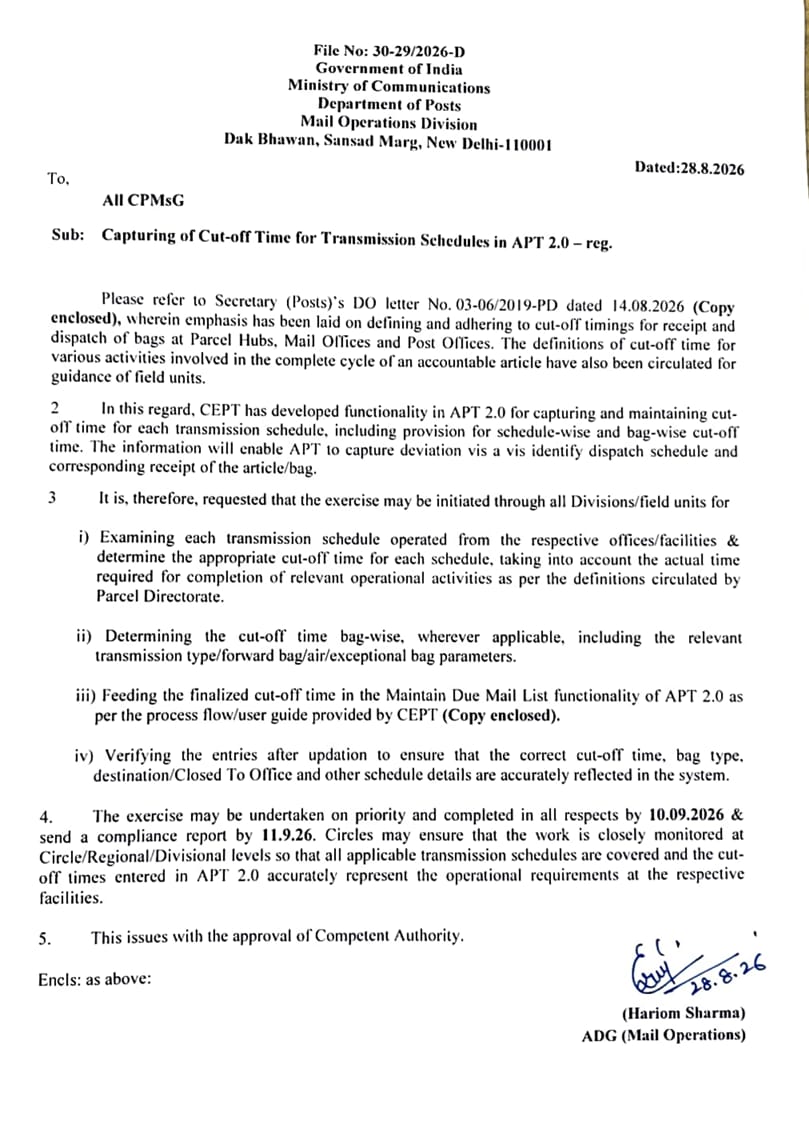 Capturing of Cut-off Time for Transmission Schedules in APT 2.0
Holidays list for 2027
Regarding VC on 10.09.2026 for Demonstration of Data Entry Module for Investigation and Vigilance in preparation for nationwide Roll-out.
Meeting of NCJCM (Staff Side) with Secretary DoP&T on 3 September 2026 on some of the outstanding issues of Central Govt Employees
04/09/2026
03/09/2026
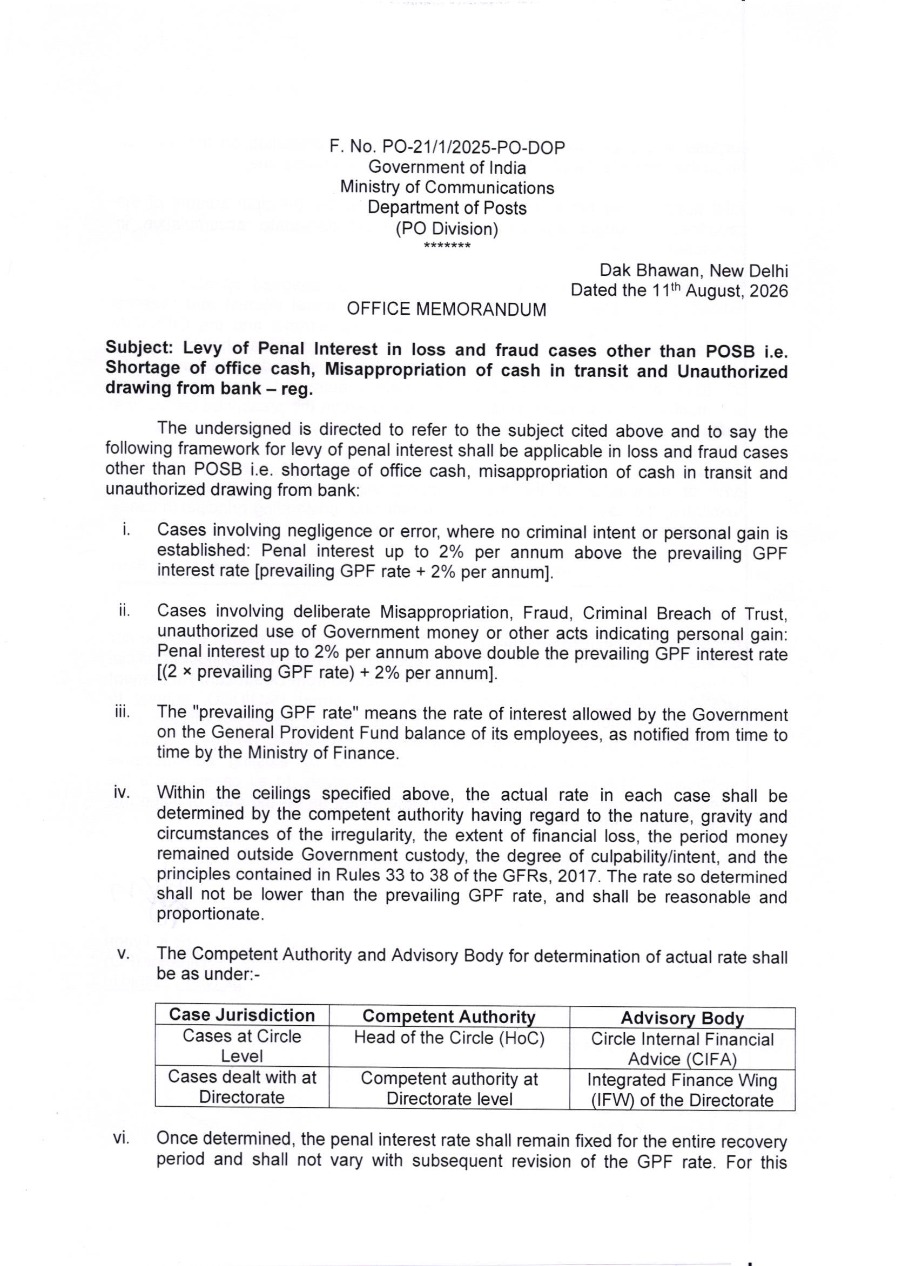
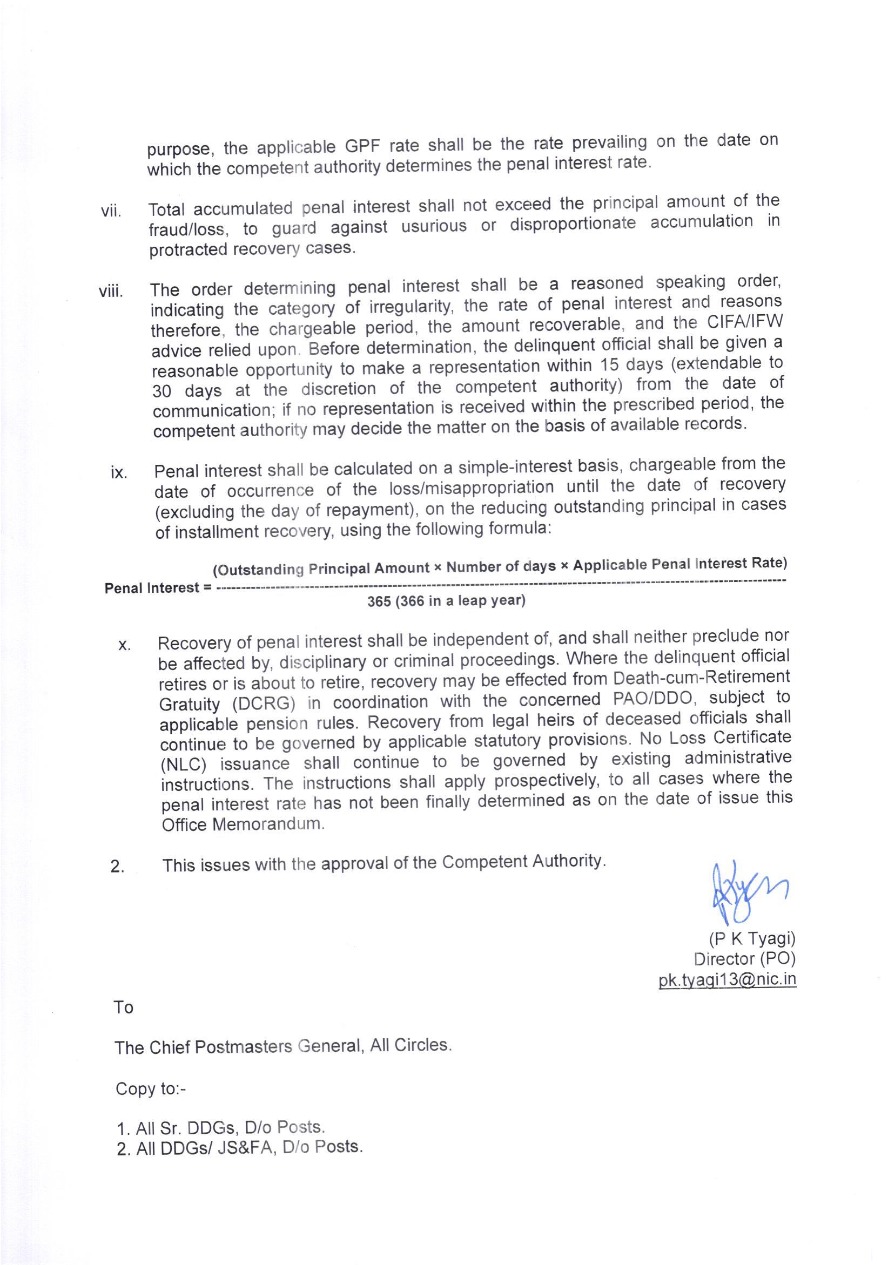
HRMS Payments through POSB interface - Revised Accounting Procedure w.e.f. 29.07.2026.
Enhanced Service Delivery in Branch Post Offices through Beat Mechanization by reyierying existing mail arrangement in Branch Post Offices regarding.
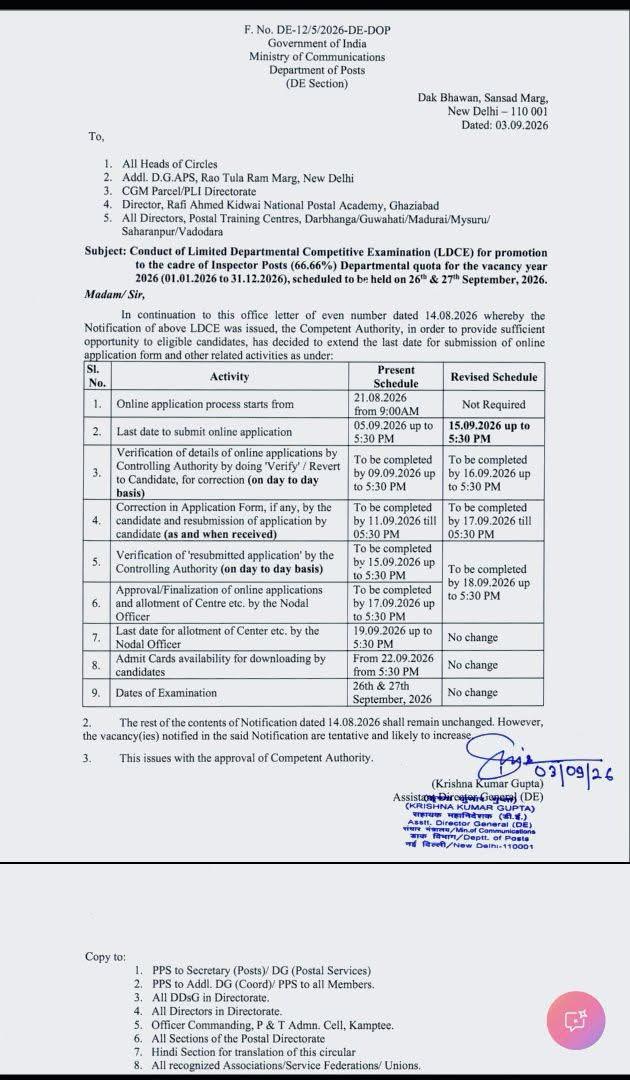
Limited Departmental Competitive Examination (LDCE) for promotion to the cadre of Inspector of Posts (66.66%) Departmental quota for the vacancy year 2026, scheduled to be held on 26th & 27th September, 2026 – Revised Schedule of Activities
T-24, ATUL GROVE ROAD
NEW DELHI 110 001
India
ph: 011- 23321378